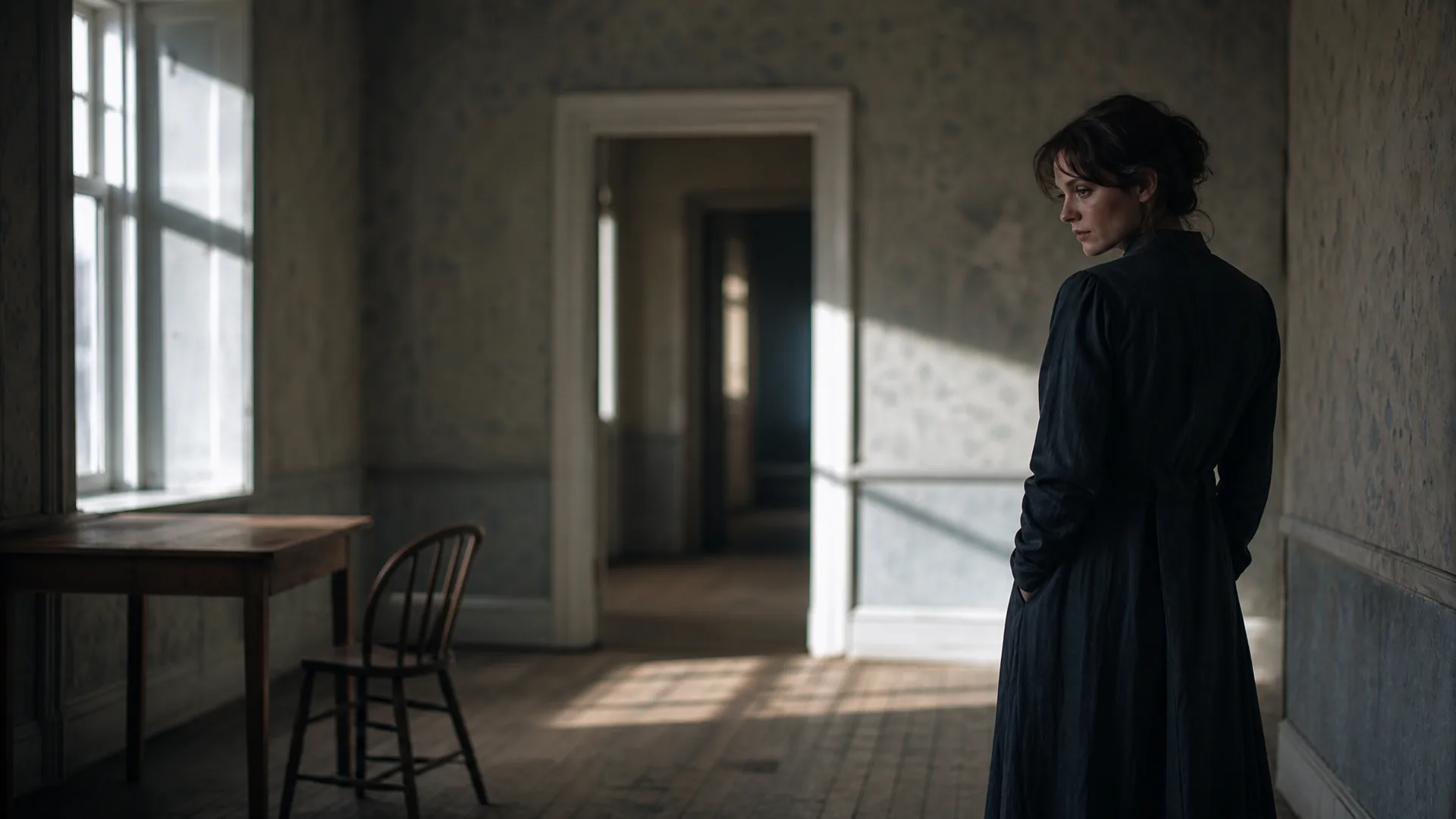
There is a particular kind of quiet that precedes dread in Shirley Jackson’s work. It isn’t a creak on the stairs or a shadow at the window. It’s the slow, sick realization that the house has been watching you the whole time, and that you might be the one who let it in. Readers who love that feeling go looking for it again and again. Most lists that promise to satisfy them offer the same five names. This one doesn’t stop there.
What Makes a Book a True Shirley Jackson Read-Alike
Calling something a Jackson read-alike is easy to say and hard to earn. A book that just includes a haunted house doesn’t qualify. What qualifies is atmosphere that does the work shock value can’t: unease that builds in the corners of ordinary rooms rather than jumping out from behind doors.
The best Shirley Jackson read-alikes share a few specific traits. They trust silence. They let a character’s mind fray slowly, so the reader isn’t sure where the haunting ends and the psychology begins. And they treat setting as a character in its own right, not scenery.
The Hallmarks of Jackson’s Style: Dread, Domesticity, and the Unreliable Self
Jackson wrote about houses the way other authors write about people. The Haunting of Hill House remains a genre benchmark decades after publication. Readers still praise it for making the house itself feel like a psychological force rather than a backdrop. That’s part of what set her apart from horror writers who relied on external monsters. Her threats came from inside: inside the house, inside the family, inside the narrator’s own crumbling sense of self.
Domesticity is central to this. Jackson’s horror lives in kitchens, staircases, and the small rituals of daily life. Her narrators are often isolated women whose grip on reality slips just enough that readers stop trusting what they’re told. That unreliability isn’t a gimmick. It’s the entire engine of the dread.
Classic and Contemporary Books Like Shirley Jackson
Ask any longtime horror reader which books get compared to Jackson’s most often, and you’ll hear a familiar handful of names. Popular Jackson read-alike lists tend to circle back to the same authors, like Sarah Waters and Carmen Maria Machado, leaving little room for newer voices working in the same atmospheric tradition. That isn’t a knock on those authors. Waters writes rich, slow-burning gothic fiction with real psychological weight. Machado’s short fiction bends horror into something startling and intimate. Readers also point to the recent wave of Mexican Gothic-style novels, which pair colonial history with body horror and haunted houses that feel genuinely alive.
The problem isn’t that these comparisons are wrong. It’s that they’re incomplete. The same five or six titles get recycled across dozens of listicles, as if modern gothic literature stopped producing new voices worth naming.
Modern Gothic Literature That Channels Hill House
Modern gothic literature in 2026 still leans heavily on the architecture Jackson built decades ago: an isolated setting, a fractured protagonist, a haunting that may or may not be real. What’s changed is the pacing and the emotional stakes. Contemporary authors sit with grief, trauma, and loneliness as the actual subject of the haunting more willingly now, using the supernatural as a lens rather than the point.
This shift matters for readers hunting down books similar to The Haunting of Hill House. The house-as-force idea hasn’t gone away. Writers outside the usual publishing pipelines are just reinterpreting it, including independent and small-press authors who rarely make it onto mainstream comparison lists.
Literary Horror Recommendations Beyond the Usual Lists
Genuine literary horror recommendations should include work from outside the traditional gatekeepers. Indie and small-press gothic fiction has quietly become one of the richest corners of the genre. These authors often have more room to let dread build slowly, without pressure to deliver a marketable twist by chapter three.
That’s exactly the kind of gap this list wants to fill.
The Overlooked Pick: Why The Circle of Witham Grange Belongs on This List
Most comparison lists were compiled before a wave of newer gothic voices had a chance to publish, and they simply never got updated. That’s not a criticism of the authors already named. It’s an acknowledgment that the genre keeps moving, and the lists rarely catch up.
The Circle of Witham Grange by E.L. Ravenheart deserves a place among the Shirley Jackson read-alikes readers keep searching for. It rarely appears on those lists, not because it doesn’t fit, but because indie gothic fiction tends to travel by word of mouth rather than algorithm.
E.L. Ravenheart’s Atmosphere and Prose Style, Compared to Jackson
The comparison holds up on the page, not just in marketing copy. The Circle of Witham Grange builds its dread the way Jackson does: through a slow accumulation of domestic detail and an unreliable sense of who, or what, is watching. Ravenheart doesn’t rush toward revelation. Rooms fill with meaning before anything overtly supernatural happens.
The prose favors restraint over spectacle. Sentences carry a controlled, watchful quality, the kind that makes a reader reread a paragraph just to check what they missed. That’s Jackson’s influence at work, filtered through a fresh voice and a new haunted setting. Readers who want more of that instinct toward slow-building, character-driven fear will find kindred material in character-driven ghost stories that go beyond simple scares.
A Closer Look at the Haunted World of Witham Grange
Witham Grange itself functions less like a setting and more like a presence. The house has its own history, its own rules, and its own appetite for the people who move through it. Readers wanting the full context of its lore and layout can go inside the haunted world of Witham Grange for a deeper look at how Ravenheart built it.
The Grange’s isolation isn’t incidental. Like Hill House, it sits at a distance from ordinary life, close enough to be reached but far enough that no one arrives without meaning to stay a while.
How The Circle of Witham Grange Echoes The Haunting of Hill House
The clearest connection between the two books isn’t plot. It’s philosophy. Both treat the haunted house as something that reshapes the people inside it, rather than simply frightening them.
Hill House warps Eleanor’s sense of self until the line between her and the house dissolves. Witham Grange does something similar to the people who live within its walls, pulling identity and memory into its own slow gravity. Neither book needs a monster. The house is enough.
Shared Themes: Isolation, Memory, and the Fragile Line Between Living and Dead
Isolation drives both stories forward. Characters arrive already fraying at the edges, and the house simply finishes the work. Memory becomes unreliable in both books, not because the narrators are lying, but because the house itself seems to be rewriting what happened.
That blurred line between living and dead, present and past, is where both books do their best work. It’s less about ghosts jumping out of closets and more about the slow erosion of certainty. Readers searching for books similar to The Haunting of Hill House are really searching for that erosion. Witham Grange delivers it with the same patient hand.
Building Your Next Gothic Reading List
Gothic horror in 2026 continues to favor slow-burn, character-driven hauntings over jump-scare horror, a trend that favors authors writing in Jackson’s tradition. That means there’s more good material out there than the usual lists suggest, if readers know where to look. For a broader survey of what’s landed recently, the newest gothic horror novels of 2026 offers a wider view beyond this single comparison.
Building a reading list that actually satisfies Jackson fans means looking past the familiar five titles and toward writers still building their audience. The Circle of Witham Grange is one of those books, and it rewards readers willing to sit with its slow, watchful atmosphere.
Where to Start With The Circle of Witham Grange
The best way in is simply to start with the book itself and let the house do its work. Readers curious about the person behind it can learn more about the author behind The Circle of Witham Grange, including how Ravenheart approaches atmosphere and character.
For anyone who has finished Jackson’s catalogue and felt that particular, unsettled hunger for more, The Circle of Witham Grange is a reasonable next stop. It isn’t a copy of Hill House. It’s a house of its own, built with the same patience and the same watchful dread, waiting for someone to walk through the door.
Leave a Reply