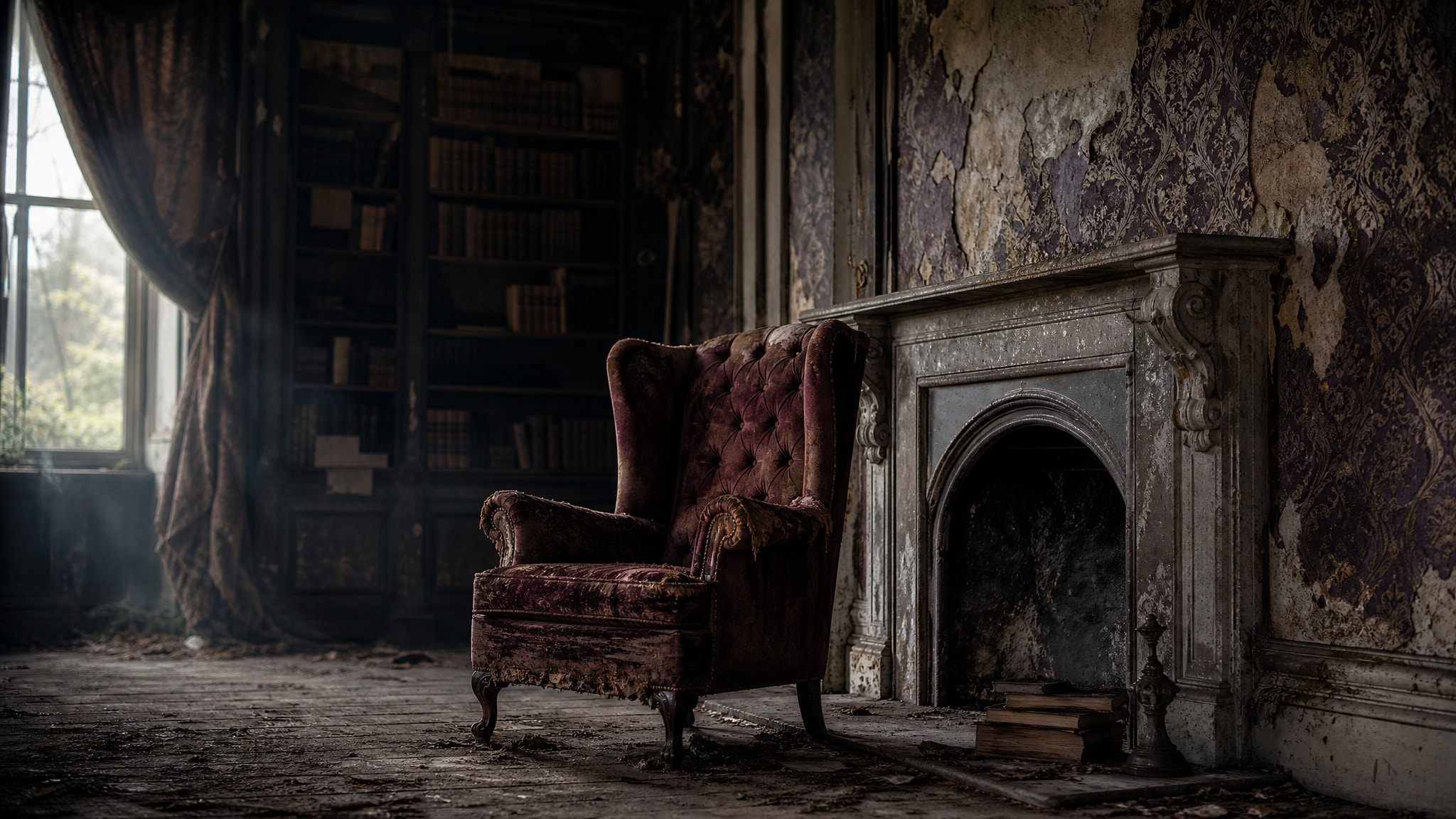
There is a particular silence that belongs only to empty rooms, a heavy stillness where the horror emerges not from sudden noise but from the accumulated weight of what was lost. My own writing process begins in that quiet space, seeking the residue of lives that ended without resolution. True dread is never manufactured for effect. It is inherited.
For readers who have grown weary of dark academia as mere costume, the search for genuine literary terror requires looking past tweed and candlelight. The most enduring dark academia gothic novels do not simply dress their characters in vintage clothing. They inhabit spaces where the architecture itself remembers every failure, every grief, every secret too heavy to speak aloud. This is fiction that demands patience, offering melancholy rather than adrenaline, asking you to sit with discomfort long enough to understand its source.
Where Dark Academia Meets True Gothic Horror
The distinction between a viral aesthetic and a literary tradition matters when you are searching for stories that haunt rather than merely decorate. Social media has flattened dark academia into a collection of visual signifiers. Genuine gothic estate novels work through psychological accumulation rather than curated imagery, and you deserve narratives that treat atmosphere as an active force, not a backdrop for romance or mystery.
Beyond the Aesthetic: When Atmosphere Becomes Dread
True gothic horror relies on the architecture of the mind as much as the architecture of the house. As I see it, the dread must be inherited, not merely encountered. This inheritance is what separates literary work from trend-driven fiction: the crumbling manor is never just a setting but an externalization of family trauma that refuses to stay buried. When a novel succeeds in this tradition, the peeling wallpaper and drafty corridors become inseparable from the protagonist’s internal deterioration, and the reading experience feels less like entertainment and more like excavation.
Atmospheric dark academia fiction earns its mood through specificity rather than vagueness. The damp spot on the ceiling maps directly onto a character’s suppressed memory. The locked door corresponds to a grief they cannot articulate. The environment becomes a mirror, reflecting psychological states back at the reader with uncomfortable precision. This is not horror that startles. It is horror that recognizes.
The Circle of Witham Grange: An Estate That Breathes
Readers of atmospheric dark academia fiction have been drifting toward slower, more introspective narratives, as the aesthetic trend that first drew them in matures into something closer to a literary subgenre in its own right. Within that shift, The Circle of Witham Grange is a defining text for anyone seeking gothic mystery books in 2026 that prioritize character-driven haunting over cheap scares. This is not a novel that rushes toward revelation. It asks you to dwell in uncertainty.
In The Circle of Witham Grange, the estate’s deterioration is tied to the protagonist’s unraveling psyche, a fusion of setting and character that defines the best of this genre. The house does not merely contain the story. It generates it, breathing with a rhythm that matches the narrator’s growing unease, so that every creak of floorboard feels like a confession.
Architecture as Antagonist in Atmospheric Dark Academia Fiction
Witham Grange works as an antagonist precisely because it has agency without malice. The estate resists the protagonist’s attempts at restoration, not through supernatural intervention but through the sheer inertia of decay, and that decay forces a confrontation with the impossibility of returning to what was. You will find no easy victories here. Only the slow recognition that some structures cannot be saved, because they were built to hold sorrow.
The novel grounds its horror in tactile reality rather than abstract menace. Cold stone leaches warmth from bare hands. Dust carries the sweet rot of forgotten textiles, and silence presses against the eardrums like deep water, so the estate’s presence is felt even when no ghost appears. This is atmosphere earned through attention to physical detail, not imposed through adjective-stacking.
Blurring the Boundary Between Living and Dead
Grief in this novel is a form of haunting that needs no supernatural explanation to feel uncanny. The dead persist not as specters but as absences so precise they take up space, shaping conversations and silences alike, until the living begin to move around them as if navigating furniture in a darkened room. Death here is not an event but a condition, one the characters must learn to inhabit rather than exorcise.
This approach honors the emotional reality of loss more faithfully than conventional ghost stories. The boundary between living and dead blurs because memory itself becomes unreliable, and the estate serves as the physical anchor for recollections that shift and distort with each retelling. Neither protagonist nor reader stays certain what is remembered and what is imagined.
Essential Dark Academia Horror Books with Literary Weight
Not every book marketed as dark academia horror offers the substance that dedicated readers crave. This is not a comprehensive list of trending titles. It is a curated selection of atmospheric dark academia fiction that shares DNA with Ravenheart’s work, focused on stories where secrets emerge through emotional resonance rather than plot mechanics. If you want fast-paced thrills or romantic subplots that resolve neatly, these will disappoint you.
Character-Driven Ghost Tales Over Plot-Heavy Thrillers
Contemporary authors writing in this space understand that the most terrifying hauntings occur within the self. Works by writers such as Susan Hill, Sarah Waters, and Andrew Michael Hurley show how character-driven ghost stories can achieve literary dread without relying on shock value or elaborate mythology. Their protagonists carry wounds that predate any supernatural encounter, and the haunting mostly exposes vulnerabilities already present beneath the surface.
These authors trust their readers to sit with ambiguity. Resolution arrives obliquely, if at all, because the point was never to solve the mystery but to understand why the mystery mattered enough to persist across generations. You recognize this quality in prose that lingers on emotional aftermath rather than climactic confrontation, treating the moment of recognition as more significant than the revelation itself.
Slow-Burn Narratives That Honor Grief and Memory
The best dark academia horror books treat time as a medium rather than an obstacle. Pacing slows deliberately to match the rhythm of mourning. Scenes breathe, and silences accumulate meaning, until the reader feels the same temporal distortion that grief imposes on the bereaved. This is not padding. It is structural empathy, a formal choice that mirrors the content’s emotional truth.
Memory in these narratives works as both sanctuary and prison. Characters return to past events not to uncover clues but to test whether their recollections still hold, and they find that the act of remembering changes what is remembered, that the estate itself participates in this revision. The horror lies in realizing that nothing stays fixed, not even loss.
Why Crumbling Estates Remain Central to Gothic Mystery Books
Decaying manors endure as settings because they externalize what families cannot speak. The collapsed roof becomes the father’s absence. The flooded cellar holds the mother’s depression. The overgrown garden marks the boundaries of a childhood that ended too soon, and private trauma turns into public architecture. Readers drawn to gothic estate novels seek this translation of feeling into form, craving worlds where inner life leaves visible traces.
Modern audiences want immersive, tactile environments partly because digital existence renders so much experience frictionless. A crumbling estate demands bodily engagement. You cannot scroll through wet plaster or swipe away the smell of mildew, and this resistance is what creates real immersion. The past refuses to stay buried in these spaces because the architecture itself insists on its continued presence, making forgetting a physical impossibility.
Finding Atmospheric Storytelling in Modern Gothic Horror
Distinguishing genuine literary horror from aesthetic-driven marketing means paying attention to prose rather than packaging. Look for sentences that evoke sensory unease through concrete detail rather than declarative statements about mood, and be wary of blurbs that promise vibes without showing how those vibes are earned. Authentic atmospheric dark academia fiction reveals its qualities in the first few pages, through rhythm and texture rather than cover design or keyword optimization.
Identifying Authors Who Prioritize Mood Over Gore
Self-published voices are currently reviving traditional gothic sensibilities without commercial dilution, often producing work that major publishers would consider too slow or too strange for mass-market success. These authors write for readers who share their specific obsessions rather than for algorithms. Their willingness to follow mood wherever it leads results in narratives that feel genuinely haunted rather than professionally constructed. Finding them means venturing beyond bestseller lists and trusting recommendations from readers whose taste aligns with your own.
Pay attention to how an author handles silence. Writers who prioritize mood over gore understand that what remains unsaid carries more weight than what is articulated, and they structure their prose to create negative space where dread can accumulate. This is the opposite of filler. It is disciplined restraint that trusts the reader to feel what the text deliberately withholds.
Transitioning From Trend Lists to Lasting Hauntings
Viral book lists serve a purpose, but they cannot sustain the deeper hunger that draws readers to gothic literature in the first place. Moving beyond trend-driven consumption means seeking narratives that offer sustained emotional engagement with mortality, accepting that the best dark academia gothic novels will not provide escape but instead demand reckoning. You read these stories not to forget yourself but to encounter aspects of experience that everyday life keeps carefully concealed.
The residue of melancholy that lingers after finishing a truly successful gothic novel is not a flaw but a feature. It signals that the fiction has done its work, that the estate has transferred something of its weight to you, and that the haunting continues now in the reader rather than the page.
Leave a Reply