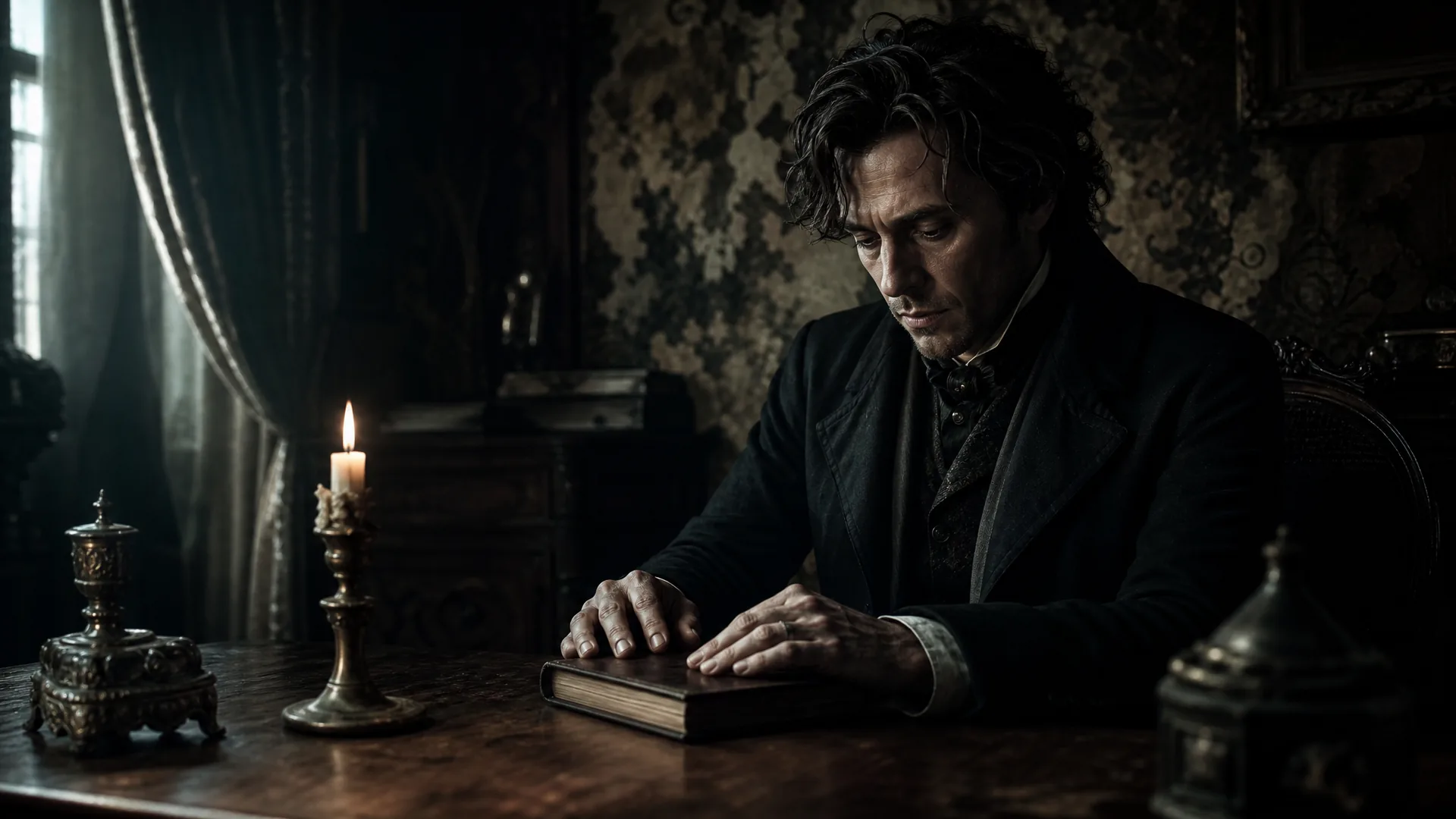
The shadows in the corner of the room have always held more truth than the harsh light of day. For those of us who find comfort in that darkness, the current literary landscape offers a peculiar solace. We are witnessing a shift away from the loud and the visceral toward something older, a return to the whispering dread that defined the genre’s golden age. This is not happening in the bright displays of chain bookstores or through the marketing budgets of major publishing houses. It is happening in the quiet corners of independent literature, where atmosphere still reigns.
The Quiet Resurgence of Indie Gothic Horror
Contemporary gothic horror is experiencing a renaissance among independent authors who prioritize psychological unease and architectural atmosphere over visceral violence. You have likely felt the fatigue yourself, that weariness that comes from scrolling endless lists of thrillers promising ever-higher body counts while neglecting the haunting quality that makes a ghost story linger after the final page. The mainstream has largely traded the slow accumulation of dread for immediate shock. What’s left behind is a silence where the thoughtful and the melancholic once thrived.
Self-published gothic horror authors are filling that silence with voices that refuse to shout.
This resurgence is not a nostalgic retreat into Victorian pastiche. It is a reclamation of what horror can be when it trusts the reader’s intelligence and patience. Readers in 2026 are actively seeking character-driven ghost tales that put mood ahead of shock value, because they understand that true terror lives in anticipation rather than revelation. The indie space lets these stories exist without commercial compromise. A crumbling manor matters as much as the monster within it, and grief carries more weight than any weapon.
Defining the Modern Self-Published Gothic Voice
The writers reshaping this genre share a sensibility that sets them apart from both their mainstream contemporaries and the pulp traditions of decades past. They understand that gothic fiction was never really about monsters, but about the spaces those monsters inhabit and the broken psyches that perceive them. The result feels timeless and, at the same time, urgent to our current anxieties about isolation and decay. This voice comes from deep literary engagement, treating horror not as a category to exploit but as a mode of expression that can hold the deepest sorrows of the human condition.
Atmosphere as Narrative Engine
Setting in these works is far more than backdrop or stage dressing for scary events. The fog rolling across the moors, the damp stone of a forgotten crypt, the oppressive silence of an empty hallway, these elements drive the plot with the same force as any protagonist’s decision. They shape the emotional trajectory of the narrative in ways dialogue alone could never manage. When you read these stories, you feel the environment pressing against your skin, because the author has treated place as a living thing with its own memories.
This approach demands prose that lingers on sensory detail without becoming self-indulgent. Every evoked scent of mildew or creak of floorboard has to earn its place, balancing description against momentum. The best indie gothic horror writers understand that atmosphere is not decoration. It is the substance meaning moves through, immersing the reader so completely that the line between text and experience starts to dissolve.
Blurring Dark Fantasy and Literary Horror
The boundaries between genres have always been somewhat artificial, and emerging horror authors in 2026 are dismantling them with real elegance. Indie dark fantasy authors meet classic gothic sensibilities at a fertile intersection, where magic feels less like spectacle and more like another form of melancholy. Supernatural elements serve as metaphors for loss rather than excuses for adventure. This blending produces stories about the fragile boundary between living and dead, stories that reward readers who crave wonder alongside their dread, because both emotions spring from the same awareness of mortality.
These hybrid works resist easy categorization. They exist in a liminal space that mirrors their own preoccupation with thresholds and transitions, offering the immersive world-building of fantasy alongside the psychological intimacy that defines the best literary horror.
E.L. Ravenheart and the Circle of Witham Grange
Within this constellation of independent voices, certain authors become touchstones for what the movement can achieve at its finest. E.L. Ravenheart’s work shows how self-publishing lets artistic visions survive that traditional gatekeepers might deem too quiet, or too strange, for mass markets. According to Ravenheart’s own author platform, her writing treats atmospheric horror not as theory but as lived practice, giving readers a concrete example of what that horror looks like when freed from commercial constraints.
Character-Driven Ghost Tales Within a Haunted World
The Circle of Witham Grange is a touchstone for self-published authors exploring the liminal space between the living and the dead through immersive world-building, according to the series’ own synopsis. What sets it apart is its refusal to treat ghosts as plot devices or jump-scare machinery. Instead they appear as manifestations of unresolved grief and historical trauma, demanding witness rather than exorcism. The characters’ inner landscapes mirror the decaying grandeur around them, people shaped by loss in ways that make their encounters with the supernatural feel inevitable rather than contrived.
Ravenheart’s work treats character and setting as inseparable, each transforming the other as the narrative moves. The haunted house becomes an extension of the protagonist’s psyche. The ghost becomes a reflection of wounds that predate any supernatural intrusion. Read closely, and the layers reward it.
Exploring Life and Death Through Atmospheric Storytelling
The boundary between life and death shows up in contemporary gothic writing less as an opposition and more as a permeable membrane, one memory and emotion flow through freely. Ravenheart explores this territory with particular care, using slow-burn horror novels that build dread to make room for contemplation rather than mere suspense. The horror comes from recognition rather than surprise, from the dawning sense that the dead have never truly left, and that the living carry their absences like physical weight.
This kind of storytelling honors the gothic tradition’s oldest concerns, inheritance, legacy, the persistence of the past, while speaking to present-day dislocation and longing. The atmospheric prose doesn’t obscure those themes. It makes the abstract feel immediate.
Why Readers Are Turning to Indie Dark Fantasy Authors
Reader communities dedicated to literary horror have seen increased engagement with slow-burn narratives that lean into melancholy and dread throughout 2026. The shift reflects a broader exhaustion with acceleration and spectacle, a wish for fiction that grants permission to linger in difficult emotions instead of rushing toward resolution. You seek these stories not despite their sadness, but because of it. There’s an honesty in the melancholic tone that brighter narratives often lack.
The Desire for Slow-Burn Dread
Surrendering to a narrative that refuses immediate gratification takes a particular kind of trust, and readers increasingly extend that trust to independent voices who have earned it. Those seeking gothic horror books for adults prioritizing atmosphere know that dread works differently than fear. It accumulates gradually, through detail and emotional resonance, rather than arriving in a single shock. That patience pays off in a way faster fiction can’t match: the sense of having lived in another consciousness, of having walked through rooms that now exist permanently in your head.
Some of the appeal is contrast, slowness inside a culture obsessed with speed. Some of it is the recognition that certain truths can only be approached sideways, gradually. Grief doesn’t announce itself with jump scares. Neither does the best gothic horror.
Community Over Algorithms
Discovery in this space happens through human connection, not recommendation engines, readers sharing beloved finds with the fervor of people who’ve found water in a desert. Niche communities help writers exploring mortality and melancholy find readers outside traditional publishing gatekeepers, and quality gets decided by collective discernment rather than sales figures. These spaces work as curatorial networks, filtering noise and amplifying voices that might otherwise vanish in the flood of self-published content.
This community-driven discovery suits gothic fiction’s inherent intimacy. Reading feels shared even when it’s done alone. You join a conversation that outlasts any single text, alongside others who understand why a particular description of twilight matters, or why a character’s silence says more than their words.
Curating Your Own List of Emerging Horror Authors 2026
Finding worthy voices in the ocean of independent publishing takes a different kind of literacy than the one you’d use on mainstream fiction. Not every self-published work labeled gothic earns that label, and learning to tell genuine atmospheric horror from aesthetic posturing will save you disappointment and point you toward what’s actually worth reading. This curation is itself a form of participation in the tradition, it asks for the same attentive reading the best gothic fiction demands.
Look first for prose that earns its lyricism, where descriptive passages serve emotional truth rather than showcase vocabulary or pad the word count. Thematic depth matters more than plot complexity here, so look for authors who show sustained engagement with loss, memory, and the persistence of the past, rather than ones who use gothic trappings as window dressing for conventional narratives. Authenticity shows up in consistency of tone, in the sense that every element serves one artistic vision instead of chasing trends.
Pay attention to how authors handle silence and absence. These negative spaces often reveal more about a writer’s ability than their most elaborate description. The best new horror authors to read understand that what goes unsaid carries as much weight as what’s on the page, and they trust readers to finish the meaning themselves.
The Future of Atmospheric Horror Fiction
This moment is not a passing trend. It’s the emergence of a sustainable literary ecosystem for moody, introspective fiction that exists alongside commercial horror rather than against it. Self-published gothic horror authors have built audience and infrastructure through direct relationships with readers rather than institutional validation, which means this work can keep going regardless of market swings. As readers tire of fast-paced commercial horror, the appetite for character-driven narratives should keep growing, and the writers committed to atmosphere and emotional depth will keep finding their people.
What sustains the movement is genuine artistic conviction, not trend-chasing. The authors thriving here write gothic fiction because they can’t write anything else, because this mode answers something no other genre does, and that authenticity resonates with readers carrying the same unmet need. The future of atmospheric horror doesn’t rest on any single author or series. It rests on the communities and conversations that keep this work alive, on the ongoing exchange between writers and readers who understand that some stories can only be told in whispers.
Leave a Reply