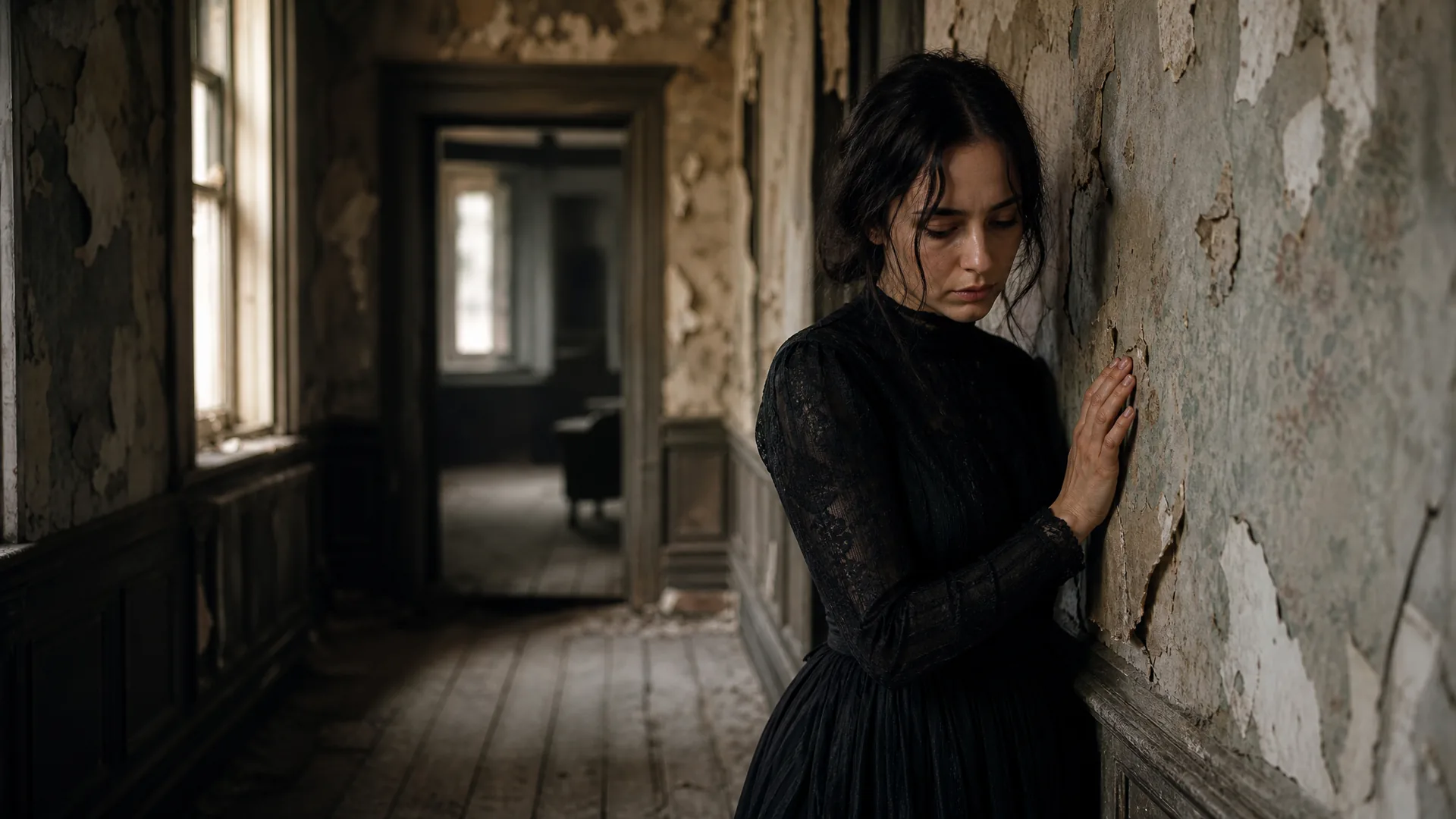
The floorboards do not creak because a ghost demands attention. They groan under the weight of a grief that has nowhere else to go. When you open a book hoping for terror, you often find noise, but the most enduring haunted house novels with strong characters offer something far more unsettling than a sudden fright. They offer recognition.
The true horror lies not in the supernatural entity rattling the chains, but in the protagonist whose internal landscape has become so fractured that the external haunting feels like a relief, or perhaps a punishment they have long deserved. This is fiction where the architecture serves as a mirror, reflecting back the parts of ourselves we have walled up and tried to forget.
Why Character Depth Matters in Haunted House Fiction
True gothic horror relies on the architecture of the mind as much as the architecture of the house. Without a protagonist whose interiority matches the labyrinthine halls, the haunting remains mere spectacle. You deserve stories that treat your intelligence and your capacity for melancholy with respect, rather than assuming you are merely waiting for the next visceral shock to keep you turning pages.
Standard commercial horror often treats the setting as a disposable stage set and the characters as interchangeable victims destined for slaughter. Atmospheric haunted house novels understand something different: fear must be earned through emotional investment and psychological complexity.
The Difference Between Atmospheric Dread and Shock Value
Shock value operates on a biological reflex. It triggers a startle response that fades the moment the adrenaline recedes and the rational mind reasserts control over the body. Atmospheric dread settles into the marrow instead, and it lingers because it bypasses the nervous system to speak directly to unresolved sorrow, existential anxiety, and the quiet desperation of living in a world that often feels indifferent to human suffering.
Readers of literary horror increasingly seek narratives where the supernatural works as a metaphor for grief and memory, a shift away from gore-heavy tropes and toward atmospheric introspection that has been shaping the genre through 2026. This distinction defines the genre: one asks you to witness violence, while the other asks you to inhabit loss.
How Interiority Transforms a Ghost Story
A ghost without a grieving witness is just a draft in an empty room. It lacks the emotional gravity required to make the supernatural feel inevitable rather than arbitrary. When an author prioritizes interiority, the haunting stops being an external invasion and becomes instead a manifestation of the protagonist’s own suppressed history, forcing them to confront what they have spent a lifetime avoiding.
You recognize this dynamic when the scariest moments occur not during paranormal manifestations, but during quiet scenes of self-reflection, when the character realizes their own complicity in the tragedy unfolding around them. The specter is secondary to the psyche. It only illuminates the dark corners of a mind already at war with itself.
The Gothic Estate Ghost Story as Psychological Mirror
The physical estate in a gothic estate ghost story is never a passive backdrop. It is an active participant, holding generational secrets within its plaster and stone. You walk these fictional halls understanding that every locked door represents a silenced family member, and every crumbling wing signifies a neglected aspect of the inheritance the current generation must now reckon with or perish beneath.
Strong characters interact with these spaces not merely as victims fleeing a monster, but as inheritors of complex emotional legacies who must decipher the architectural language of their ancestors before they can hope to survive the night.
Architecture as an Extension of Memory
Corridors stretch and contract in rhythm with the narrator’s deteriorating mental state, and the blueprint of the house becomes a cartography of trauma mapped onto physical space. Windows that refuse to open suggest a suffocation of voice. Staircases leading to nowhere embody the futility of trying to escape a past that exists outside of linear time.
In The Circle of Witham Grange, the estate’s decay is inextricably linked to the protagonist’s unraveling sense of self. Setting acts as an externalized psyche here, not a passive backdrop. You feel the dampness in the walls as a direct correlate to the tears the character cannot shed, making the environment a sympathetic extension of their internal ruin.
Inherited Trauma Within Ancestral Walls
Ghosts in these narratives rarely haunt randomly. They attach themselves to bloodlines because the trauma was never resolved, only passed down through silence and ritualized dysfunction. The protagonist does not simply encounter a spirit; they inherit a debt, tasked with feeling the pain that previous generations were too broken or too cruel to acknowledge openly.
This burden transforms the haunted mansion books you cherish from simple scary stories into profound meditations on how family history shapes identity. We are all living in houses built by people who did not know how to love without causing damage. The haunting is the inheritance, and exorcism requires not holy water but the painful work of witnessing truths that were buried alive.
Modern Masters of Character-Driven Ghost Tales
Contemporary voices are reimagining the haunted house not as a relic of Victorian excess but as a vital vessel for exploring modern isolation and the persistence of historical wounds. You will find that the most resonant works emerging in 2025 and 2026 prioritize narrative voice and melancholy over intricate plot mechanics, trusting that your patience will be rewarded with emotional truth rather than cheap resolution.
These authors understand that the supernatural element must remain secondary to the human condition, using ghosts as lenses to examine relational dynamics that would be unbearable if viewed without the protective distance of genre.
Literary Horror That Lingers After the Last Page
Books that endure beyond the final chapter are those that refuse to tie up every loose end, leaving you with questions about your own life rather than satisfied answers about the fictional mystery.
Authors defining this space write sentences that taste of ash and rain, crafting prose styles that embody the very atmosphere they describe rather than merely reporting on it. If you seek slow-burn horror that builds dread through accumulation of detail rather than escalation of violence, look for writers who treat language as a sensory instrument, one capable of transmitting mood directly into your bloodstream.
The best literary horror does not conclude. It echoes.
Contemporary Voices Reimagining the Haunted House
New masters of the form are stripping away the baroque ornamentation of classic gothic to reveal the raw structural beams of loneliness and displacement underneath. They populate their estates with characters who are messy, contradictory, and deeply specific, rejecting the archetypal innocent victim in favor of complicated adults navigating compromised moral landscapes.
For readers seeking gothic horror books prioritizing atmosphere over traditional scares, these contemporary works offer a freshness that honors tradition while refusing to be imprisoned by it. You discover in these pages that the haunted house is still evolving, adapting to hold the particular anxieties of our current moment while retaining its ancient power to unnerve.
The Circle of Witham Grange: A Study in Melancholy and Stone
This novel stands as a definitive example of character-driven haunted house fiction, where the setting amplifies emotional stakes rather than distracting from them with theatrical effects. You encounter a narrative that trusts you to sit with discomfort, using sensory detail and slow-burn dread to explore the fragile boundary between life and death without ever resorting to gratuitous violence or easy explanations.
It is a work that understands the estate not as a puzzle box to be solved but as a wound to be tended, requiring the same patience and tenderness from the reader that the protagonist must eventually learn to offer themselves.
Blurring the Boundary Between Living and Dead
The spirits here do not announce themselves with dramatic manifestations. They seep into consciousness through gaps in perception, making it impossible to distinguish between supernatural presence and psychological projection. This ambiguity serves the story’s deeper purpose: to suggest that grief itself is a kind of haunting where the dead continue to occupy space in the lives of those left behind.
You experience this blurring not as confusion but as recognition, understanding that the boundary between living and dead has always been more porous than polite society admits. The horror emerges from intimacy rather than invasion, making the uncanny feel uncomfortably familiar.
Estate Atmosphere as Narrative Engine
Every description of peeling wallpaper or overgrown garden path advances the emotional arc. Atmosphere functions as plot here, not decoration. The house breathes in sync with the protagonist’s resignation, its deterioration mirroring the slow collapse of defenses that have kept traumatic memory at bay for decades.
When you decide to acquire your copy of The Circle of Witham Grange, you are choosing a reading experience where setting and character fuse so completely that separating them would destroy the meaning of both. The estate drives the story forward not through hidden passages or secret rooms, but through the relentless pressure of accumulated feeling made visible in stone and shadow.
Identifying True Atmospheric Haunted House Novels
Not every book marketed as gothic delivers the depth you crave. Learning to distinguish genuine atmospheric haunted house novels from commercial imitations saves you from disappointment. You must read past the cover copy and into the first few pages, listening for a voice that carries weight rather than performance, and noticing whether the author trusts silence as much as action.
This discernment protects your reading time and ensures that the hours you spend in fictional darkness yield illumination rather than mere entertainment.
Reading for Voice and Sensory Immersion
Pay attention to how the author handles quiet moments. True atmospheric fiction reveals its mastery in the spaces between events rather than in the events themselves. Does the prose engage multiple senses beyond sight, evoking the smell of wet wool or the taste of metallic air that signals approaching unease?
You should feel the temperature drop in the sentence structure itself, experiencing the chill through rhythm and syntax rather than through explicit description of cold. If the writing tells you that the house is scary without making your skin prickle, put it down. Seek authors who understand that immersion is a physical act accomplished through linguistic precision.
Beyond the Bestseller List Tropes
Commercial success often rewards familiarity, which means the lists you see prominently displayed tend to feature books that replicate proven formulas rather than risk genuine emotional exposure. You will find richer fare by looking to independent publishers and niche communities that celebrate more character-driven ghost story recommendations over mass-market thrills.
These hidden gems prioritize mood over momentum and complexity over clarity, offering experiences that challenge rather than comfort. The best haunted house fiction does not always announce itself with fanfare. Sometimes it waits quietly on a forgotten shelf for the reader who needs exactly its particular frequency of sorrow.
Curating Your Own Library of Literary Dread
Building a personal collection of gothic horror that resonates emotionally requires intentionality, treating your bookshelf as a curated archive of feelings rather than a trophy case of famous titles. Pair classic texts with modern indie voices to experience the full spectrum of character-centric haunting stories, letting older works provide historical context while newer ones show how the tradition continues to evolve and breathe.
This juxtaposition creates a conversation across centuries. You discover that the fundamental human need to externalize inner demons through architectural metaphor remains constant even as the specific forms of those demons shift with cultural tides.
Your library should reflect your own relationship with darkness, containing volumes that speak to your particular sorrows and questions rather than those deemed universally significant by critics or algorithms. Return to books that unsettled you years ago and reread them with fresh eyes, noticing how your own growth changes what the text reveals about the intersection of place and psyche. Subscribe to author newsletters and small press updates to stay connected with writers who share your commitment to fiction that haunts through honesty rather than artifice, so that your collection remains a living thing, growing alongside your own understanding of what it means to be afraid, and why that fear matters.
Leave a Reply