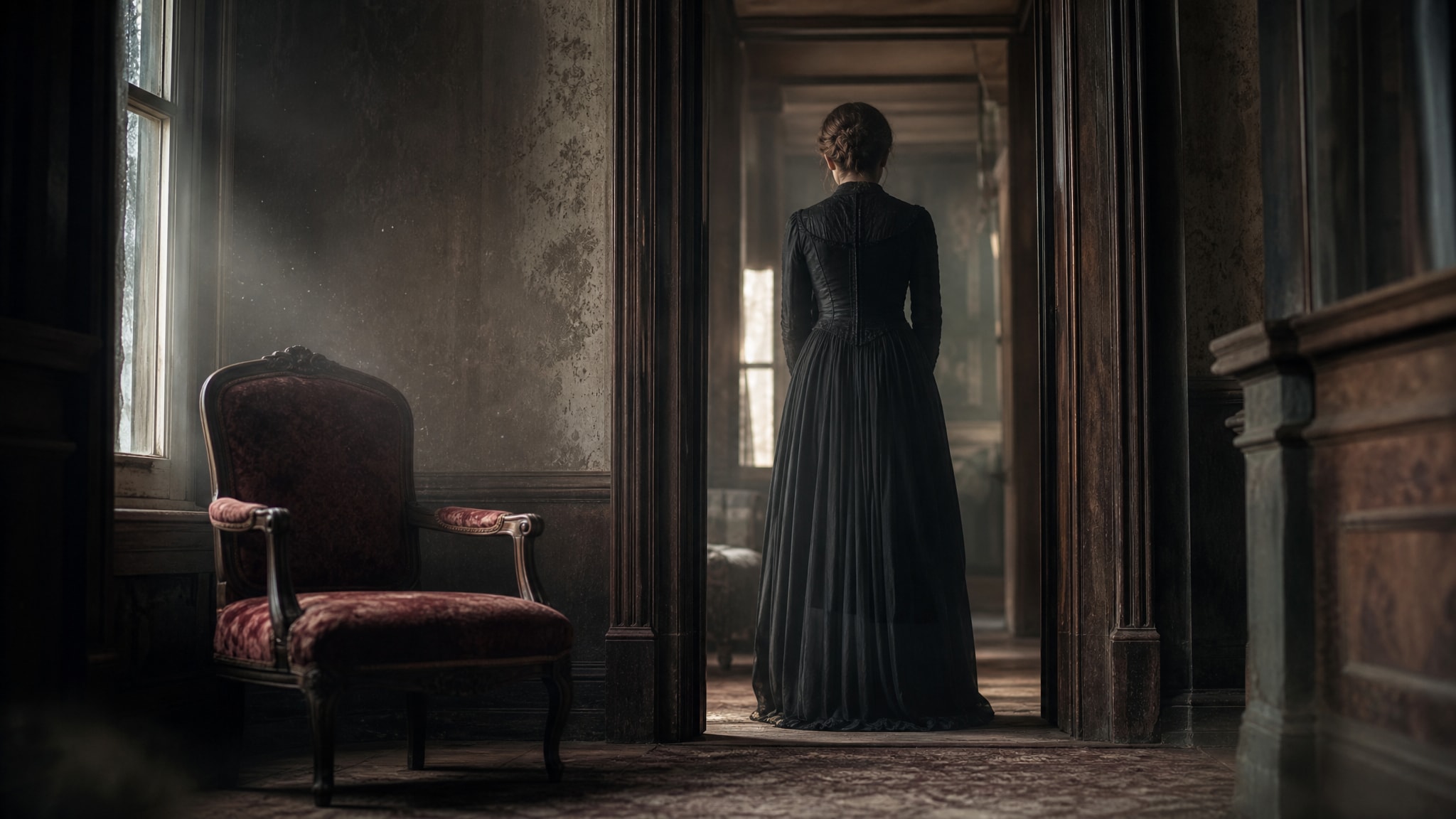
The most enduring stories about mortality don’t treat death as a final destination or a monster to defeat. They treat it as an atmosphere that soaks into the living world. When you look for books about the boundary between life and death, you’re probably looking for something that refuses the comfort of closure, something willing to sit in the space where memory and presence collide. This thematic niche demands patience because it cares more about the weight of absence than the mechanics of haunting.
Fiction that dwells authentically here works differently than conventional horror. It trades adrenaline for melancholy, spectacle for sensory dread. It asks you to inhabit the threshold rather than watch it from outside, so that reading itself becomes a kind of contemplative engagement with loss.
Defining Liminal Space Fiction in Gothic Literature
Liminal space fiction is less a rigid subgenre than an emotional state, one where characters stay suspended between existence and absence. Literary critics have long noted that the most enduring gothic fictions use the threshold between life and death to explore social silences and repressed histories, not simply to frighten. That’s what separates them from conventional ghost stories, which lean on external threats and supernatural rules. You feel the distinction most clearly when a narrative refuses to explain the haunting, and you’re left with the same disorientation as characters who can no longer separate their grief from the architecture around them.
The Threshold as Narrative Device
The threshold is the engine of meaning in novels about mortality. Doorways, staircases, garden gates: in this fiction, they become sites where time and being start to dissolve. These spaces don’t just separate the living from the dead. They embody the condition of characters who can’t fully live in either realm. A hallway becomes hesitation made physical. A locked room becomes the mind’s refusal to process what it’s lost.
This device rejects the binary logic that runs through most genre fiction, where crossing a threshold marks a clean shift from safety to danger, from ignorance to knowledge. Here, the threshold stays perpetually uncrossed, and that’s what gives liminal space fiction its particular emotional texture.
Atmosphere Over Explanation
Atmospheric storytelling carries the fragility of existence without leaning on plot twists or gore. It embeds dread in sensory detail instead of supernatural revelation. The creak of floorboards, the quality of light through dusty glass, the particular silence of an empty room: these carry more narrative weight than any apparition could. Reader communities built around literary horror increasingly favor tone and thematic depth over scare counts, and their discussions now center on emotional residue and atmosphere as the real markers of quality.
Explanation weakens the boundary’s power because it domesticates the unknown into a problem with a solution. When atmosphere takes precedence instead, you have to sit with discomfort rather than resolve it. That’s closer to what grieving actually feels like.
Novels About Mortality That Refuse Easy Answers
Character-driven narratives about mortality interrogate memory and regret instead of delivering closure. They treat the boundary between life and death as an ongoing negotiation, not a line to be crossed. These novels understand that the living often haunt themselves more thoroughly than any specter could, which makes grief itself the real supernatural force. You recognize this approach when the story’s central mystery isn’t who died or how, but why the living can’t let go.
Grief works as a haunting presence in these books because it refuses linear time or rational progression. The past intrudes on the present not through ghostly visitation but through emotional patterns survivors can’t escape.
Grief as a Haunting Presence
When grief becomes the haunting force, the boundary blurs, because the living can no longer tell their internal landscape from external reality. Loss reshapes perception so thoroughly that every familiar object carries the weight of absence, and every silence echoes with voices that exist only in memory. This is why certain death and afterlife novels feel more psychologically true than stories with literal ghosts. They render mourning as a form of possession that needs no supernatural justification.
The haunting persists precisely because it can’t be exorcised through ritual or revelation. Grief demands acknowledgment, not resolution, and the best of these narratives refuse to offer catharsis as a reward for endurance.
The Unreliable Narrator at Death’s Door
Narrators standing at death’s door often prove unreliable, not because they lie, but because proximity to mortality fractures their capacity for coherent testimony. Their accounts waver between clarity and confusion, mirroring the dissolution of self that comes with both dying and profound bereavement. This unreliability serves thematic truth rather than plot manipulation. It asks whether stable narration is even possible once the boundary between life and death turns permeable.
Read these narrators with suspicion, not of their honesty, but of their capacity to organize experience into meaningful sequence. Their fragmentation is the story’s most honest testimony.
Dark Fantasy Worlds Where Death Is a Landscape
Dark fantasy treats death as tangible terrain because metaphysical questions need physical spaces to move through, struggle in, transform within. When the afterlife becomes geography instead of abstraction, the journey through grief takes on bodily weight, and the boundary between life and death shows up as mountains, rivers, or deserts to be crossed rather than concepts to be understood. These landscapes work as mirrors of psychological states: external obstacles correspond to internal resistances, and the terrain itself enforces the emotional logic of mourning.
Worldbuilding in these novels serves mood and theme above all else, turning abstract anxieties about mortality into environments characters must navigate with their whole bodies. The landscape doesn’t symbolize death. It enacts it.
Geographies of the Afterlife
Afterlife geographies in dark fantasy extend character interiority, rendering emotional states as terrain that resists easy passage. Rivers of forgetfulness, forests of whispered names, cities built from accumulated sorrow: these aren’t backdrop. They’re active participants in the story’s exploration of what it means to lose and be lost. These spaces demand engagement rather than interpretation. Characters move through grief with their feet and hands, not just their minds.
The geography refuses to yield its meaning passively. Characters earn understanding through traversal, and the land remembers every step taken in denial or despair.
Rituals That Sustain the Veil
Rituals in dark fantasy worlds often maintain the boundary between life and death rather than pierce it, acknowledging that some separations exist to protect both realms from collapse. These practices honor the necessity of distance even as characters yearn to bridge it, recognizing that complete union with the dead would annihilate the living. The ritual becomes a form of disciplined love, one that sustains connection without demanding possession.
You see in these rituals a recognition that the boundary is sacred precisely because it can’t be fully crossed. Maintenance replaces conquest as the highest form of devotion.
The Circle of Witham Grange: A Case Study in Atmospheric Dread
E.L. Ravenheart builds The Circle of Witham Grange as a novel where the house itself breathes with the unresolved grief of its inhabitants, making architecture the primary medium through which the boundary between life and death is felt rather than explained. It’s a clear example of how character-driven exploration of liminal spaces replaces exposition with embodied experience, letting setting and voice carry thematic weight that plot summary never could. You find in the haunted world of Witham Grange a demonstration of how atmospheric storytelling can render mortality as environment rather than event.
The novel understands that the fragile boundary lives in sensory detail and architectural rhythm, not in supernatural mechanics or revelatory climaxes. Dread accumulates through small observations rather than sudden shocks.
Witham Grange as Liminal Architecture
Witham Grange functions as liminal architecture because its rooms, corridors, and thresholds don’t just contain characters. They actively shape how those characters relate to loss and memory. The house remembers what its inhabitants can’t bear to recall, holding grief in its walls and floors until the boundary between internal feeling and external structure dissolves entirely. Every creak and shadow carries the weight of unprocessed history, and the building itself becomes a participant in the story’s exploration of what persists after death.
Architecture here works as emotional archive. The house doesn’t haunt its residents. It mourns alongside them.
Character Interiority as Supernatural Engine
Character interiority drives the supernatural elements of The Circle of Witham Grange, because the boundary between life and death emerges from psychological states rather than external forces. What looks like haunting is really the projection of unresolved grief onto physical space, so the supernatural becomes indistinguishable from the emotional labor of remembering. Every eerie occurrence serves character development rather than genre convention, and the fantastic stays anchored in recognizable human experience.
You can see in this technique how crafting atmosphere in gothic fiction requires subordinating supernatural spectacle to psychological truth. The ghost is always also a feeling.
Gothic Literature Themes That Haunt Beyond the Page
Classic gothic motifs persist in contemporary fiction about life and death because decaying estates, silenced voices, and inherited trauma still articulate present-day anxieties about loss that realist fiction can’t quite reach. Modern authors return to these traditions not out of nostalgia but because gothic vocabulary remains uniquely suited to how the past inhabits the present and how absence shapes identity. You recognize this continuity when contemporary narratives use crumbling architecture or family secrets not as period decoration but as living metaphors for ongoing struggles with mortality and memory.
Thematic continuity matters more than historical accuracy in this tradition. Gothic fiction endures because it gives language to experiences that resist straightforward articulation.
These themes haunt beyond the page because they correspond to real structures of feeling that readers carry into their encounters with fiction. The decaying estate is also the aging body. The silenced voice is also suppressed grief. Inherited trauma is also the unspoken legacy of familial loss. Contemporary gothic fiction earns its resonance by honoring these correspondences without reducing them to simple allegory, letting the symbolic weight emerge from narrative texture rather than authorial declaration.
Death and Afterlife Novels for Readers Who Crave Weight
Readers who value emotional weight over narrative resolution should look for death and afterlife novels that treat the boundary between life and death as sacred rather than solvable. These books understand that the deepest encounters with mortality come not through revelation or triumph but through sustained attention to the textures of absence and the rhythms of endurance. You’ll find such work among ghost stories driven by character over scares and dark fantasy books that blur life and death, where tonal resonance matters more than trope adherence.
Not every book about mortality will satisfy this hunger. Fiction that treats death as a puzzle to solve or an obstacle to overcome can’t offer the contemplative space that weighted reading asks for. The limitation lies in the approach, not the subject: narratives built around resolution foreclose the very openness that makes encounters with the boundary meaningful.
Slow-Burn Pacing as Emotional Fidelity
Slow-burn pacing serves emotional fidelity in death and afterlife novels because grief and mortality unfold on their own timeline, one that resists acceleration or compression. Slow-burn horror that builds dread deliberately honors this rhythm, letting atmosphere accumulate gradually and trusting that sustained attention yields deeper engagement than rapid escalation ever could. You experience in this pacing a formal echo of mourning itself, where time stretches and contracts unpredictably and meaning comes through repetition rather than progression.
Haste betrays the subject. Only patience can hold the weight of what these stories ask you to carry.
Why Some Boundaries Shouldn’t Be Crossed
Some boundaries shouldn’t be crossed in fiction, because crossing them domesticates what should stay mysterious and reduces the sacred to the manageable. The most enduring death and afterlife novels understand that the boundary’s power lies in its resistance to penetration, and they honor that resistance by leaving certain questions permanently unanswered. This restraint isn’t evasion. It’s reverence, an acknowledgment that complete knowledge of death would annihilate the living perspective that makes storytelling possible.
You learn from these novels that some mysteries are meant to be inhabited rather than solved. The boundary protects as much as it separates.
Finding Your Next Read in the Shadow of the Threshold
Choosing your next read in this thematic niche means paying attention to mood and thematic hunger rather than genre labels, since books about the boundary between life and death span multiple categories while sharing the same tonal and structural priorities that defy easy classification. You might start with The Circle of Witham Grange if you want fiction that embodies the fragile boundary through setting and voice, and use it as both an entry point and a benchmark for evaluating other work in this space. Engaging with such fiction becomes a contemplative act when you let your reading choices align with your own encounters with mortality and memory, meeting the books where you actually are rather than where genre conventions say you should be.
Trust your appetite for atmosphere over your obligation to complete series or check boxes. The right book finds you when you stop searching for categories and start listening for resonance.
Leave a Reply