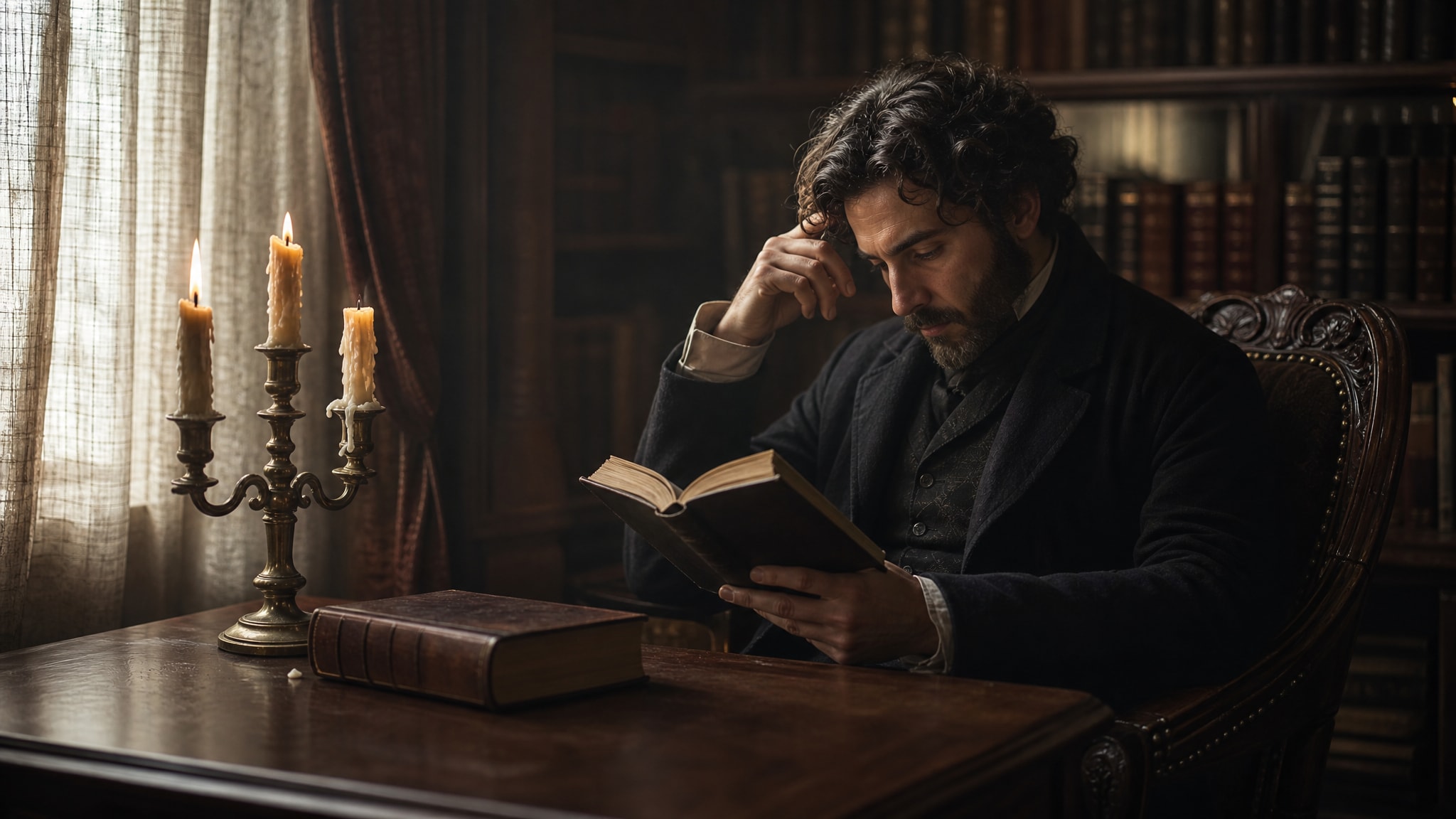
Choosing the right book in this genre isn’t about finding a scary story. It’s about locating a specific frequency of unease that resonates with your current state of mind. The shelves are crowded with titles promising terror, yet many readers find themselves fatigued by spectacle when they actually crave the quiet, persistent haunting of literary suspense. Learning how to choose your next gothic horror read means looking past the cover art and asking whether the narrative architecture supports the kind of dread you can comfortably inhabit for three hundred pages.
This guide won’t promise you the scariest book on the market. It won’t steer you toward high-octane thrillers designed to spike your adrenaline either.
Identifying Your Preferred Shade of Dread
Before you commit to a new title, be honest with yourself. Do you want the lingering melancholy of atmospheric fiction, or the catharsis of visceral shock? Confuse the two and you’ll end up disappointed. True gothic horror relies less on the sudden appearance of a monster and more on the slow accumulation of wrongness within a familiar space. You deserve a reading experience that honors your tolerance for tension, not one that assaults your senses when what you’re seeking is solace in sadness.
Distinguishing Atmospheric Melancholy from Visceral Shock
Atmospheric gothic horror works through suggestion and the weight of history. Shock-based horror depends on immediate sensory violation and release. Readers who prefer the former often find themselves bored by jump scares, while those chasing adrenaline may mistake lyrical prose for stalling. Understanding the differences between gothic novels and ghost stories helps clarify whether you want a sustained mood piece or a traditional supernatural encounter before you spend money on a hardcover.
Matching Pacing to Your Current Emotional Capacity
Your emotional bandwidth fluctuates. A book that felt perfect during a stressful month might feel impenetrable during a period of grief or exhaustion. Read the first chapter specifically to test the sentence rhythm against your own internal tempo, before you commit to the rest. If you know you respond best to slow-burn horror that builds dread over time, you can avoid picking up a novel whose opening pages demand an intensity you can’t currently offer.
What to Look for in Gothic Fiction Settings
Setting in dark fantasy is never merely decorative. It’s the primary indicator of quality, because the environment has to actively participate in the haunting rather than serve as a passive backdrop. When you evaluate a potential read, ask whether the physical space reflects the protagonist’s psychological deterioration, or whether it’s just a spooky venue where plot events happen to occur.
A crumbling manor that exists only to frighten is a stage set. A house that remembers is a character.
The House as a Living Character
In the most effective examples of the genre, the estate itself becomes a repository of memory. Setting drives character motivation instead of merely hosting it. The Circle of Witham Grange shows this well: the architecture holds the family’s secrets so tightly that the building’s decay mirrors the lineage’s collapse. Look for descriptions where the masonry seems to possess intent, where the haunting feels structural rather than incidental.
Landscapes That Mirror Internal Decay
External weather and terrain in superior gothic fiction correspond to the interior landscape of the narrator, blending psychology and geography until they’re indistinguishable. Fog doesn’t roll in to obscure vision. It arrives to manifest confusion, isolation, repressed guilt. When choosing dark fantasy books, check that the natural world feels like an extension of the character’s trauma, not a generic mood filter applied to every scene.
Evaluating Character Depth in Dark Fantasy Books
Character-driven ghost stories use personal history and unresolved trauma to ground supernatural elements in emotional reality. The richness of the protagonist’s inner life predicts your satisfaction better than external stakes do. Contemporary gothic fiction has shifted toward exploring the boundary between life and death through unresolved generational trauma, rather than simple supernatural mechanics.
Grief and Trauma as Narrative Engines
Grief is what separates literary gothic fiction from generic horror. It transforms the ghost into a metaphor for loss that demands processing rather than exorcism. Look for flashbacks that alter the present action, and supernatural events that trigger emotional breakthroughs instead of physical chases. You’ll find deeper resonance in tales where the haunting cannot resolve until the protagonist confronts what they’ve refused to mourn.
Why Interiority Matters More Than Plot Mechanics
Plot mechanics give a mystery its skeleton. Interiority gives it the flesh that makes the dread palpable and the resolution meaningful. A protagonist who merely reacts to bumps in the night offers no foothold for empathy. One whose internal monologue reveals the texture of their fear invites you to inhabit their skin. Curated lists of character-driven ghost stories can save you from investing hours in narratives that prioritize puzzle-solving over human complexity.
Navigating the Boundary Between Life and Death in Fiction
Authors handle the metaphysical threshold in vastly different ways, from ambiguous hauntings that might be psychological breaks to explicit afterlife cosmologies with rigid rules. Do you prefer stories where death remains a mystery to be endured, or a puzzle to be solved? That preference dictates which subgenre will satisfy you.
Ambiguity sustains dread by denying closure. Explicit supernatural systems offer comfort through order.
Some readers find peace in knowing exactly how the spirit world operates. Others need the uncertainty of the unknown to keep the spell intact. There’s no correct answer here, only the honest acknowledgment of whether you want your horror to explain the afterlife, or to question whether one exists at all.
Finding Atmospheric Storytelling in Modern Gothic Horror
Modern gothic authors build dread without relying on gore. They focus on texture, temperature, and sound to create a somatic experience of fear. Sample opening chapters for voice and texture, not for plot hooks or inciting incidents, and you’ll get a truer sense of whether a novel fits your mood.
Sensory Language Over Exposition
Effective atmospheric storytelling favors the smell of damp wool or the taste of metallic air over dialogue that spells out the backstory. This commitment to sensory immersion signals that the author trusts you to deduce the horror from the environment, rather than needing to be told what to feel. When matching horror books to mood, look for prose that engages your body before it engages your intellect.
The Role of Silence and Negative Space
What happens off the page often carries more weight than what’s explicitly described. Silence forces your imagination to fill the void with your own specific fears. Authors who master negative space understand that anticipation is always more terrifying than revelation. You can spot this skill by noticing how often the narrative pulls back just as the tension peaks, leaving you alone in the quiet with your own assumptions.
Curating a Reading List Around Specific Hauntings
Building a sustainable reading habit in this genre takes practical strategy, given the density of the prose and the emotional toll of the subject matter. Series versus standalone commitments offer different rewards. A series lets you sink deeper into a world’s mythology, while a standalone gives you a contained emotional arc that resolves without demanding years of investment.
Series Versus Standalone Commitments
Choosing between a multi-volume saga and a single novel depends on whether you want to live inside a haunting or visit it briefly. Long-form atmospheric work like The Circle of Witham Grange rewards patience by layering dread across installments, letting characters evolve alongside your own understanding of the central mystery. Standalones, by contrast, offer the sharp, focused intensity of a singular vision that leaves no loose threads.
Using Book Clubs to Test New Voices
Communal analysis turns solitary reading into a shared excavation, making dense or challenging texts more accessible through collective interpretation. Discussion questions for deeper engagement let you test whether a complex gothic text will sustain your interest before you commit to the entire series. Readers often say the audiobook format deepens the immersive quality of dense atmospheric prose, letting the rhythm of the sentences dictate the pace of dread. You can experience the atmosphere through audio if the printed page feels too heavy.
Trusting Your Instincts When Choosing Dark Fiction
The right gothic read is a resonance between reader and text, not a checklist completion or a concession to critical consensus. Abandon books that fail to cast the necessary spell within the first fifty pages, regardless of their reputation or awards. Forcing yourself through a mismatched tone only breeds resentment toward the genre. Trust your own capacity for dread as the final arbiter of what belongs on your nightstand.
Leave a Reply