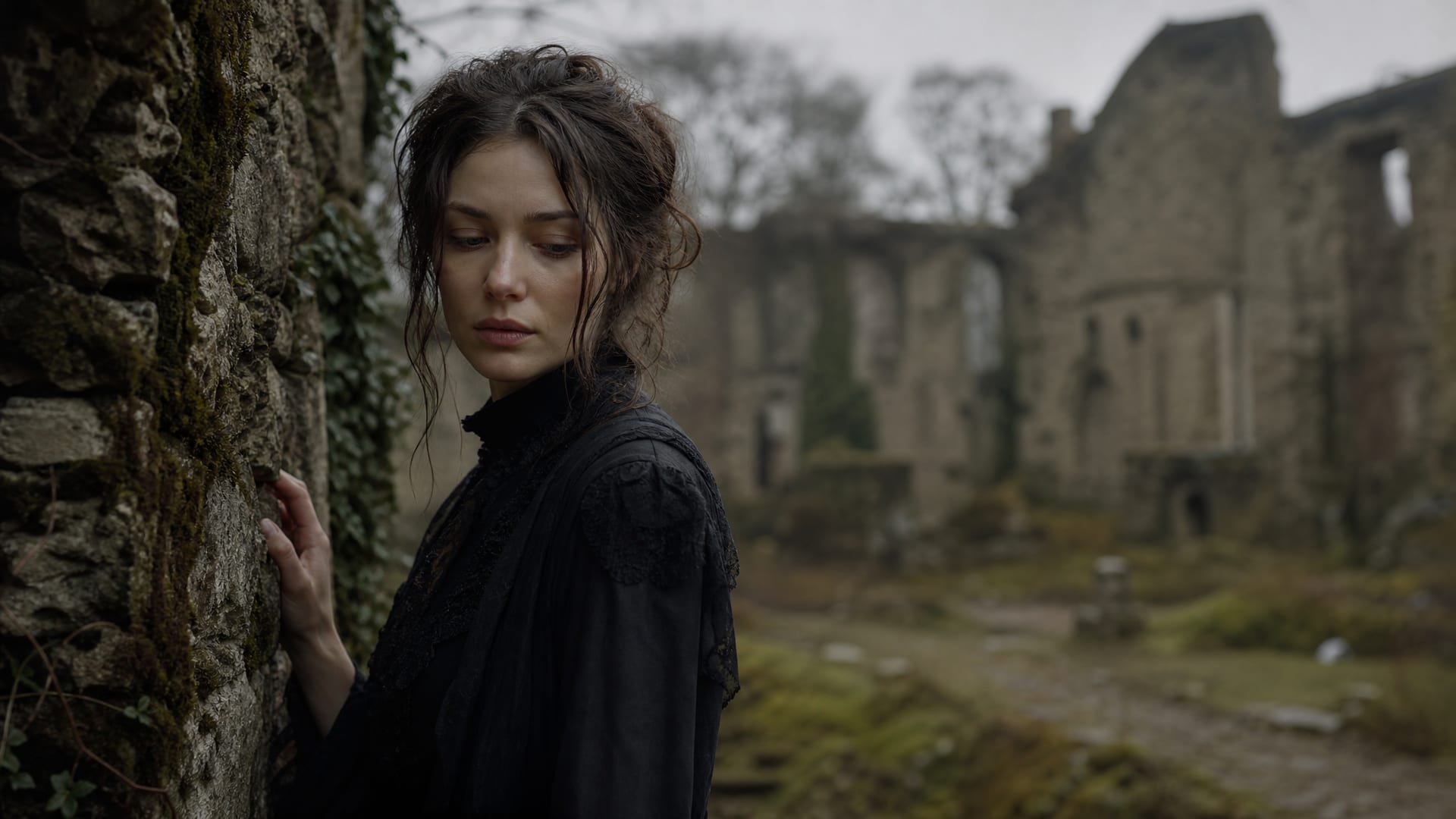
The silence of a ruined estate often speaks louder than any scream, and it is within that heavy, expectant quiet that the most enduring ghost stories find their breath. Readers who seek out the author biography and background of E.L. Ravenheart will discover a writer attuned to these frequencies of loss and memory, rather than one interested in mere spectacle. This E.L. Ravenheart interview looks at the architecture of dread behind The Circle of Witham Grange, how a specific landscape became a vessel for exploring the porous boundary between the living and the dead. For those who prefer their horror steeped in melancholy and rooted in psychological truth, understanding the author behind gothic horror shows why this particular narrative lingers long after the final page.
The Origins of The Circle of Witham Grange
Every haunted house novel begins with a foundation, but for Ravenheart, the structure was always secondary to the feeling of the air around it. The setting did not come from a wish to write a generic spooky manor. It came from a visceral encounter with a specific geography that seemed to hold its own grief in the soil and stone.
A Landscape That Demanded a Story
The damp, oppressive weight of the English countryside was the primary catalyst for this narrative. It gave Ravenheart a sensory template that no amount of imagination could fabricate in isolation. She describes her writing process as an act of excavation rather than construction, pulling narrative threads from the emotional weight of physical spaces that already carried a history of sorrow.
You can trace the lineage of every creaking floorboard and drafty corridor back to real locations, places where the mist clings to the hedgerows and the light fails prematurely in the afternoon. That produces a natural claustrophobia, and the claustrophobia dictates the rhythm of the prose. The geographical isolation of the grange isn’t a plot device to trap characters. It is an active participant in the story, mirroring the internal desolation of those who walk its halls and keeping the external world as hostile as the supernatural one.
Defining the Gothic Atmosphere Early
Atmosphere in this tradition isn’t a decorative layer applied after the plot is outlined. It’s the medium the story is told through. Establishing the tone took a disciplined focus on sensory deprivation and accumulation, where the absence of sound or warmth carries as much narrative weight as a violent apparition.
The initial concept evolved from a vague mood into a structured narrative only when the boundary between living and dead stopped being a binary line and became a permeable membrane defined by regret. This keeps the gothic atmosphere in service of the emotional arc. The setting never sits still as a backdrop; it reflects the characters’ unresolved histories back at them.
E.L. Ravenheart’s Writing Process for Atmospheric Horror
Crafting fiction that relies on mood rather than momentum takes a counterintuitive discipline, one that resists the urge to accelerate toward a climax. The E.L. Ravenheart writing process puts immersion ahead of efficiency. The author has to inhabit the same uncomfortable headspace as the protagonist, or the dread won’t feel earned.
Cultivating Dread Through Sensory Detail
Dread is a physiological response before it is an intellectual one. Getting it onto the page takes close attention to the texture of fear. Ravenheart uses specific drafting rituals, controlling her immediate environment to mirror the novel’s melancholic tone, often writing in low light or silence to stay tuned to the story’s somber frequency.
You’ll notice the descriptions in The Circle of Witham Grange avoid abstract adjectives in favor of concrete, tactile sensations. The goal is to make you feel the cold seep into your own bones, not simply tell you the room is chilly. This approach to pacing favors slow-burn horror that builds dread through accumulation, trusting that the reader’s patience will yield a deeper, more resonant terror than any sudden shock could.
Balancing Character Interiority with Supernatural Elements
The supernatural elements in this work never exist independently of the characters’ psychological states. They function as external manifestations of internal wounds. Balancing this takes constant negotiation: the ghost cannot appear until the emotional groundwork has been laid to justify its presence as a metaphor rather than a monster.
If the character’s grief doesn’t warrant a haunting, the haunting gets discarded, no matter how visually striking it might have been in isolation. This rigorous adherence to emotional logic separates the work from genre entries where paranormal events happen to people rather than emerging from them. Every spectral encounter has to advance the human drama at the core of the book.
Character-Driven Ghost Tales Over Cheap Scares
Fear fades quickly once the adrenaline recedes, but the ache of recognition persists because it touches something true about the human condition. Ravenheart’s approach centers on the idea that horror works best when it becomes a language for losses that ordinary realism cannot contain.
Why Emotional Resonance Outlasts Fear
Putting emotional resonance ahead of shock tactics is a deliberate rejection of the idea that horror must assault the senses to be valid. According to literary analysis of the novel’s thematic structure, The Circle of Witham Grange exemplifies a broader shift toward character-driven ghost stories, where the haunting works as a metaphor for unresolved grief rather than external antagonism.
You’re invited to engage with the text not as a victim of scares but as a witness to sorrow, and that turns the reading experience from a test of endurance into an act of empathy. This distinction matters: a jump scare creates a momentary spike in heart rate, but a well-rendered depiction of longing changes how you see the shadows in your own home, and that change lasts.
The Fragile Boundary Between Life and Death
The novel explores the boundary between the living and the dead not as a chasm to be bridged by necromancy, but as a shared space occupied by memory and denial. Death here is less a biological endpoint and more an emotional landscape the living have to navigate, often getting lost in its fog because they can’t bear to let go.
Genre observers have noted a broader move in 2026 among gothic horror readers toward atmospheric pacing and psychological depth over gore, part of a return to classic literary suspense traditions that treat mortality as a mystery to be inhabited rather than a problem to be solved. This reframes the ghost story as a meditation on continuity: the dead stay present because the living haven’t finished loving them yet.
Influences and the Modern Gothic Tradition
No writer exists in a vacuum, and Ravenheart’s voice comes out of a conversation with ancestors who understood that the uncanny is fundamentally domestic. The influences are palpable, but the work avoids pastiche by filtering these traditions through a distinctly modern sensibility, one that favors interiority over melodrama.
The literary touchstones behind The Circle of Witham Grange include the psychological precision of Shirley Jackson and the elemental bleakness of M.R. James, yet the synthesis lands squarely in the current moment. Within the 2026 landscape of self-published gothic horror, this novel stands out by refusing to trade its literary ambitions for marketability, alongside other authors revitalizing the genre through serious engagement with form.
You’ll find that the prose respects the reader’s intelligence. It assumes familiarity with the tradition while pushing against its conventions to articulate new anxieties about isolation and inheritance. This commitment to craft over trope points to a maturing independent publishing sphere, niche genres can sustain serious work without institutional validation.
Navigating Self-Publishing as a Gothic Author
Bringing a work of such specific tonal requirements to market presents challenges that differ vastly from promoting faster-paced commercial fiction. The path to finding an audience for atmospheric horror is neither straight nor guaranteed. It calls for patience and genuine connection rather than algorithmic gaming.
Finding Readers Who Crave Atmosphere
Finding the right readership means bypassing broad horror categories to locate the specific communities that value mood and character above all else. Building a following around niche themes like haunted house novels with strong characters means showing up in spaces where literary discussion happens and offering real engagement, not transactional promotion.
You may find that the most effective outreach comes not from advertising but from joining conversations about character-driven ghost story recommendations, where trust builds through shared taste rather than sales pitches. This organic approach takes longer to pay off, but the readers it wins tend to stay loyal and speak up for work that defies easy categorization.
The Challenge of Marketing Melancholy
Promoting moody, literary horror in an ecosystem built for high-concept hooks means accepting that some traditional metrics of success won’t apply. Algorithms favor clarity and speed, and both run against the slow, ambiguous nature of gothic fiction. Visibility has to be earned through word-of-mouth and critical appreciation rather than paid placement.
This isn’t a book for readers chasing rapid plot progression or definitive answers, and saying so upfront actually strengthens the bond with the readers it’s for, the ones tired of being oversold. The marketing strategy focuses on conveying the texture of the experience rather than summarizing the plot, trusting the right reader to recognize the signal amid the noise of more conventional offerings.
What Lies Beyond Witham Grange
The completion of one story inevitably opens the door to others, though the next threshold hasn’t been fully crossed. Ravenheart stays quiet on future projects, preferring to let the work speak for itself rather than promising sequels or spin-offs before the ink is dry.
Current explorations point to a continued interest in the intersection of place and psyche, though the specific settings and eras remain in flux as the creative process unfolds. Writing The Circle of Witham Grange revealed that our relationship with mortality is less about fearing the end and more about negotiating the terms of our continuation through the memories we leave behind in physical spaces. For those moved by this exploration of grief and architecture, the most direct way to support this kind of uncompromising fiction is to acquire your copy of The Circle of Witham Grange and carry its quiet haunting into your own library.
Leave a Reply