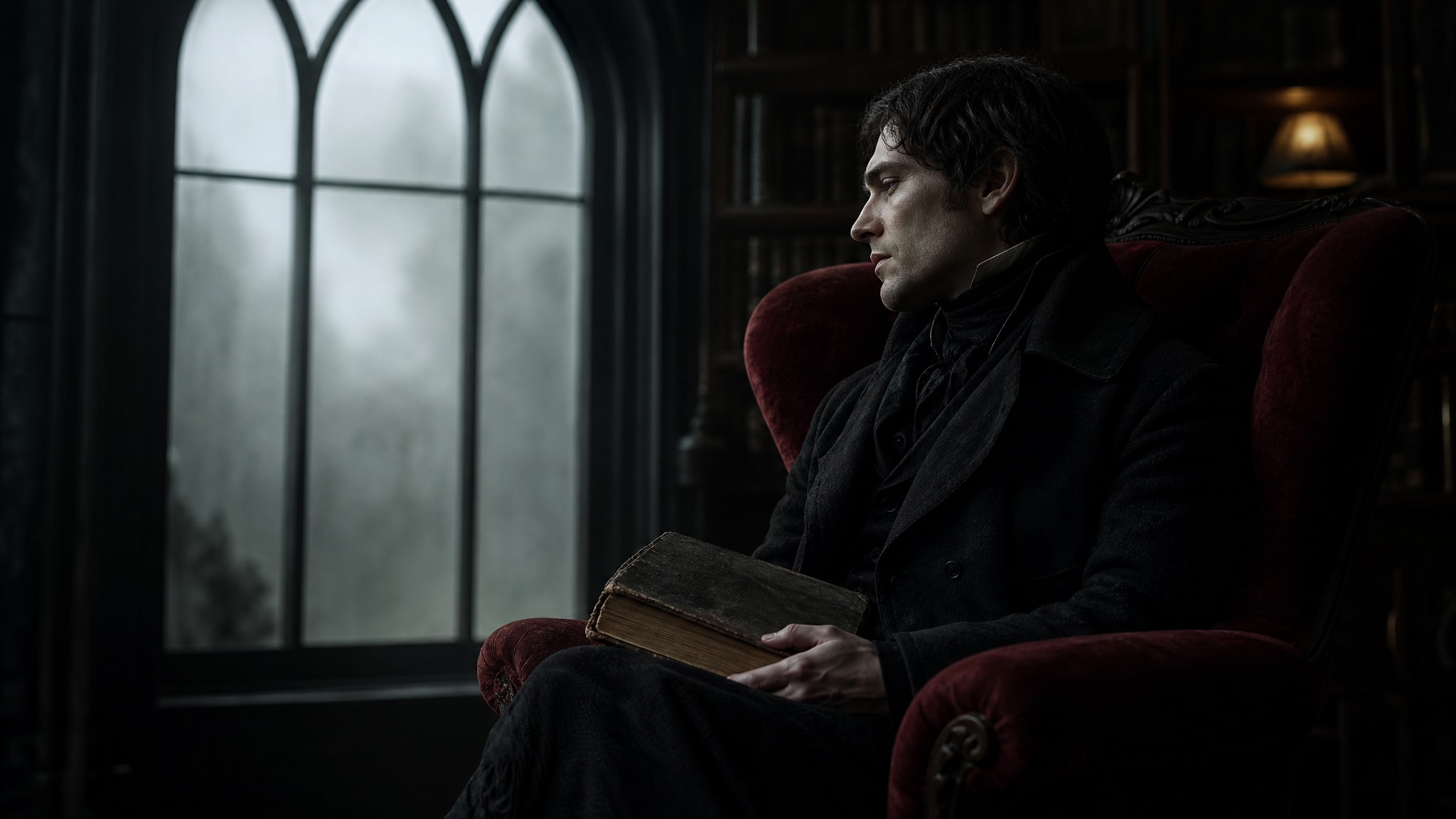
There is a particular silence that falls when we open a book of gothic horror, a quietude that feels less like an absence of sound and more like a held breath. We do not come to these pages for the adrenaline of the chase or the visceral shock of violence, but for something far older and more resonant within our own chests. The reasons to read gothic horror fiction are rarely simple, rooted instead in a complex negotiation between our waking lives and the shadowed corridors of our interior worlds.
Gothic horror persists because it gives form to anxieties that resist rational articulation, transforming private dread into shared aesthetic experience. This genre asks us to sit with discomfort rather than flee from it, offering a space where melancholy is not a problem to be solved but a landscape to be traversed. For those of you who find yourselves returning to these darkened estates and fog-bound moors, the attraction is not merely entertainment but a profound recognition of the self.
The Psychology of Dread in Fiction as Safe Exploration
We often mistake our fascination with the macabre for a desire to be frightened. Yet the psychology of dread in fiction serves a function far more restorative than mere terror. When you engage with atmospheric horror, you are participating in a controlled rehearsal for mortality and loss, testing the weight of grief within a container that cannot truly harm you. This bounded narrative space allows the mind to process uncertainties that would be paralyzing in reality, granting us permission to feel deeply without the consequence of actual catastrophe.
This safety does not diminish the emotional truth of the experience. It amplifies it by removing the need for self-preservation.
Readers frequently seek out slow-burn narratives that build dread deliberately, and this pacing mirrors the actual rhythm of human anxiety, which rarely arrives as a sudden blow but instead accumulates like dust on forgotten furniture. The appeal of ghost stories lies in this accumulation, where the supernatural element acts as a metaphor for the psychological burdens we carry silently through our days. By externalizing these internal states onto the architecture of a crumbling manor or the whisper of a spectral presence, the genre validates feelings that society often demands we suppress or resolve too quickly.
Atmospheric Storytelling and the Comfort in Melancholy Fiction
The texture of a gothic novel is woven from sensory details that prioritize mood over momentum, creating an immersive environment where sadness becomes a valid aesthetic experience. You might wonder why anyone would seek out such heaviness, yet there is a distinct solace in fiction that refuses to rush past sorrow toward an unearned resolution. Atmospheric storytelling differs from shock-based horror because it invites lingering rather than flinching. It asks the reader to inhabit the damp chill of a stone hallway, or the oppressive weight of a family secret, as one might inhabit a memory.
Comfort in melancholy fiction arises precisely because it honors the validity of difficult emotions without demanding they be fixed or explained away.
In crafting The Circle of Witham Grange, I sought to let silence and architecture carry as much weight as dialogue, trusting atmosphere to convey what exposition cannot. This approach acknowledges that some truths exist beyond language, residing instead in the quality of light through a dirty window or the specific cadence of footsteps on aged wood. When a story respects this non-verbal communication, it offers readers a sanctuary where their own unarticulated sorrows can rest without judgment, providing a companionship that brighter, faster narratives simply cannot offer.
Character-Driven Ghost Tales That Honor Grief
A haunting loses its power when it exists solely to startle. It becomes meaningful only when the supernatural reflects the fragile topography of human wound and history. Character-driven ghost tales distinguish themselves by anchoring the spectral in the psychological, ensuring that every apparition serves as a mirror to the protagonist’s unresolved interior conflict rather than a cheap thrill. You will notice that in the most enduring works of this tradition, the ghost is never merely a monster but a manifestation of legacy, regret, or love that has nowhere else to go.
This distinction matters because it transforms fear into empathy.
Readers often describe returning to haunting stories not for fear but for the recognition of their own unspoken grief, mirrored in decaying estates and spectral voices. When we encounter ghost stories centered on inner lives, we are witnessing a narrative act of witness where pain is neither sensationalized nor dismissed but treated with the solemnity it deserves. The supernatural becomes a vocabulary for articulating losses that defy ordinary speech, allowing characters and readers alike to confront what has been buried without being consumed by it.
Exploring the Life and Death Boundary Through Narrative
Gothic horror occupies a unique literary threshold where the dead speak not to terrify but to testify about the nature of absence and the persistence of connection. This boundary work is essential for readers navigating their own relationships with mortality, offering a symbolic language for experiences that remain otherwise ineffable. The genre does not pretend to solve the mystery of death. Instead it creates a space where the living and the dead can coexist in uneasy dialogue, acknowledging that separation is never as clean as we might wish.
Fiction that dwells at the threshold reminds us that the past is never truly gone but continues to shape the present in ways both visible and invisible.
This exploration moves beyond spectacle to address the fundamental human need to maintain bonds across the divide of mortality, validating the sense that love and obligation do not cease with physical death. When a narrative treats this boundary with reverence rather than exploitation, it allows you to examine your own inheritances and legacies without the defensive armor that daily life requires. The story becomes a medium through which the unspeakable weight of absence can be carried, if not lifted, by sharing the burden with the page.
Why Read Dark Fantasy When Reality Feels Unbearable
It may seem paradoxical to turn toward darkness when the world outside already feels overwhelming, yet this impulse stems from a need for emotional honesty rather than escapism. Optimism can feel false during periods of cultural or personal uncertainty, making the unflinching gaze of gothic horror a more trustworthy companion than narratives that insist on silver linings. You read dark fantasy not to forget your troubles but to find them reflected in a form that grants them dignity and structure, validating complexity when simplicity rings hollow.
Melancholy fiction does not offer escape from reality but rather a deeper entry into its emotional truths.
This genre acknowledges that suffering is not an aberration to be corrected but an integral thread in the fabric of human experience, deserving of the same artistic attention as joy or triumph. When reality feels unbearable, the ordered darkness of a well-crafted gothic narrative provides a container strong enough to hold what feels chaotic and formless in lived experience. The appeal lies not in distraction but in resonance, affirming that your perception of the world’s weight is accurate and that you are not alone in bearing it.
Finding Your Place in the Gothic Tradition Today
Contemporary gothic literature faces the challenge of sustaining classic sensibilities without descending into pastiche, requiring authors to root atmospheric horror in genuine character and place rather than borrowed aesthetics. Modern works must earn their shadows through psychological authenticity, ensuring that the dread emerges organically from human fragility rather than decorative gloom. You can identify these authentic contributions by their willingness to let mood serve meaning, where every creaking floorboard and whispered secret advances our understanding of the people who inhabit these haunted spaces.
The Circle of Witham Grange is an attempt to honor this tradition while speaking to contemporary experiences of isolation and inherited trauma.
When selecting your next atmospheric read, look for narratives that trust your intelligence enough to leave certain mysteries unresolved, recognizing that ambiguity often carries more truth than neat explanation. The best modern gothic fiction understands that the genre’s power lies not in replicating Victorian tropes but in applying its core insights about grief, memory, and the uncanny to the specific anxieties of our current moment. This continuity ensures that the tradition remains a living conversation rather than a museum piece, inviting new readers to find their own reflections in its enduring darkness.
Reading as Ritual: Returning to Haunting Stories Again and Again
Our loyalty to specific gothic texts often resembles devotion more than consumption, driven by a need to revisit landscapes that have become integral to our emotional geography. Rereading functions as a ritual that deepens understanding over time, revealing layers of meaning that remained hidden during earlier encounters when we were different people with different wounds. You return to these stories not because you have forgotten their endings, but because the journey itself has become a necessary practice of tending to your inner life, a way of checking in with the parts of yourself that only emerge in shadow.
Stories that refuse easy resolution demand this cyclical engagement, asking us to sit with their questions rather than extract their answers.
This pattern of return speaks to the enduring power of narratives that treat reading as a collaborative act of meaning-making rather than passive entertainment. Each visit to a beloved gothic text becomes a conversation between who you were and who you have become, with the story serving as the constant ground against which change can be measured. The ritual persists because some truths cannot be learned once and retained forever. They must be re-encountered in each season of life, finding fresh relevance in familiar darkness.
Leave a Reply