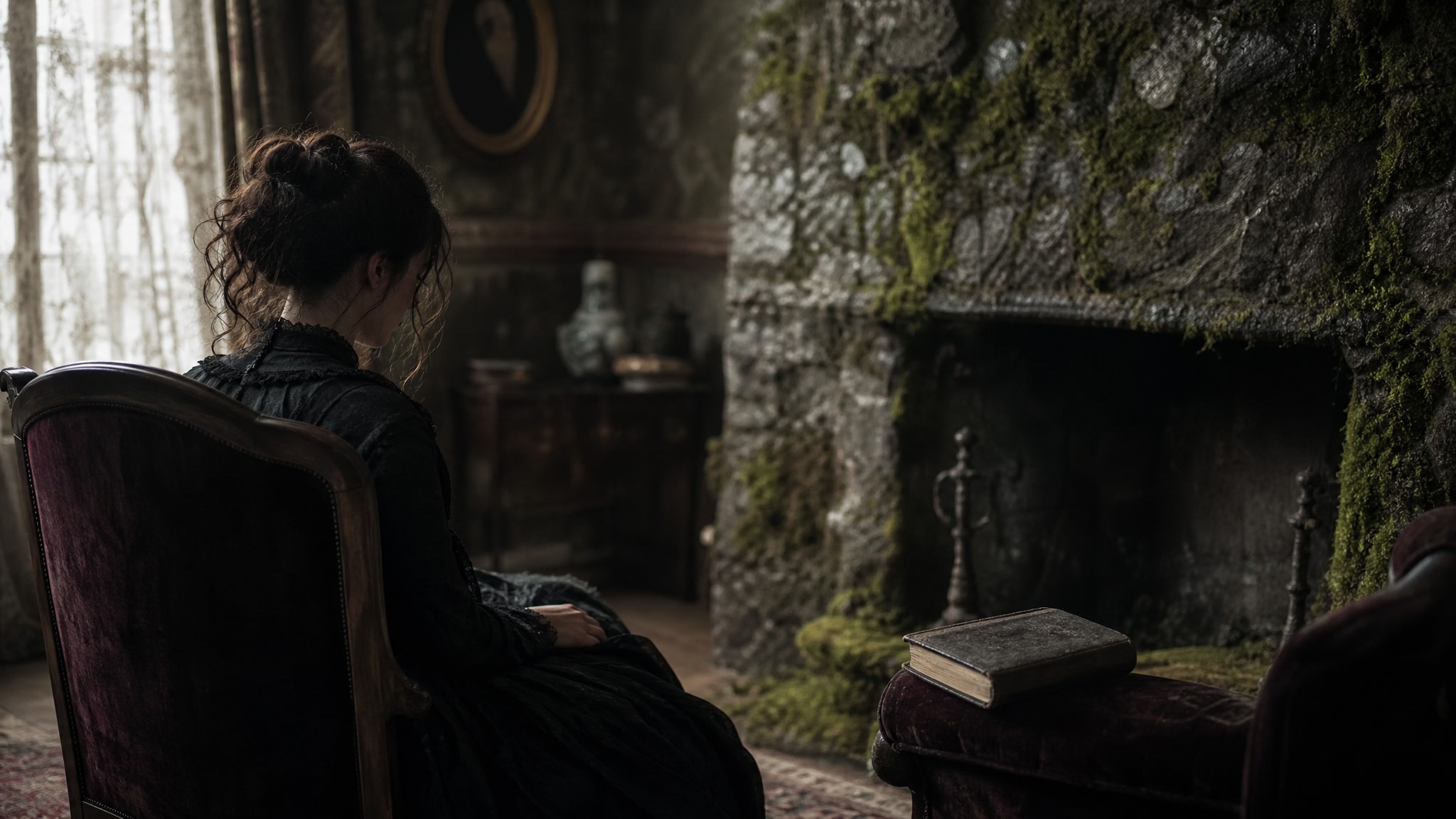
Closing the final page of a novel often leaves a silence heavier than the one before you began reading. For those who have just finished The Circle of Witham Grange, that silence is likely filled with the lingering scent of damp stone and the weight of unspoken grief rather than the adrenaline of survival. You are not looking for another scare. You want a return to a specific texture of melancholy that has grown rare in modern genre fiction.
This ache defines the search for gothic horror novels similar to The Circle of Witham Grange. The appeal lies not in the mechanics of a haunting but in the atmosphere that makes the supernatural feel like a natural extension of sorrow. Readers seeking bone-chilling gothic horror often look past surface-level spookiness, hunting for stories where the haunting feels psychologically inevitable and rooted in place, according to the New York Times. If you are wondering why we return to gothic horror after a story like this, the answer usually sits in that emotional resonance, not in entertainment alone.
Why Readers Seek Books Like The Circle of Witham Grange
The specific melancholy of this novel sets it apart from generic horror lists that prize shock over substance. E.L. Ravenheart’s work is built around the fragile boundary between the living and the dead, carving out a niche for readers who want mood over gore. The result reads less like a thriller and more like a meditation on loss, where the supernatural works as metaphor for internal states rather than an external threat.
You likely crave books like The Circle of Witham Grange because they trust you enough to leave questions unanswered. The dread builds through accumulation. Certainty erodes slowly instead of breaking all at once. That patience gives the setting room to breathe and lets the characters’ inner lives expand until the ghost story and the human story become the same story.
Traditional plot-heavy horror treats the supernatural as a problem to solve or defeat. Character-driven ghost stories do something different: they treat the haunting as a condition to endure or understand, and the tone shifts from suspenseful anticipation to reflective sorrow.
Atmospheric Haunted Estate Fiction for Lingering Dread
A house in these stories is never just a backdrop. It is the primary antagonist and the only reliable narrator. When you look for gothic novels similar to Witham Grange, you are really looking for architecture that remembers. The decaying grandeur of the estate mirrors the psychological state of the people inside it, and the physical rot speeds up the emotional decay in turn.
Comparing two distinct hauntings shows how different authors use domestic space to carry trauma. Shirley Jackson’s Hill House has a malicious sentience that differs from the mournful passivity of Witham Grange, yet both insist the true horror lives in the walls themselves. The most effective haunted estate fiction refuses to explain its architecture, so the mystery of the structure stays as opaque as the ghosts inside it.
These settings ask a reader to sit with discomfort and no promise of resolution. The isolation is total. Escape routes close off, one by one, until the characters have to face what they buried beneath the floorboards.
Slow-Burning Gothic Novels Exploring the Boundary Between Life and Death
Ghosts in this tradition are rarely monsters. They are echoes of unresolved emotion trapped in amber. The novel follows a slow-burn gothic tradition close to classics like The Turn of the Screw and Rebecca, where dread builds through atmosphere rather than overt violence. That lineage matters: it tells you the terror will be intellectual and emotional, rising from the ambiguity of whether the supernatural presence is real or a projection of guilt.
If you value fiction exploring the threshold of mortality, you already know the scariest moment isn’t the apparition’s appearance. It’s the realization that the living and the dead share the same loneliness. Writers working in this space treat the boundary as permeable not because of magic but because grief refuses to acknowledge finality, and death becomes a continuation of relationship rather than an end. That changes the stakes of the whole story.
This approach won’t satisfy readers who need definitive answers or a clean moral line between the living and the departed.
Character-Driven Ghost Stories With Melancholy Tones
Internal grief drives the haunting in these stories, and the supernatural element plays second to the human capacity for sorrow. When you read next after Witham Grange, look for protagonists whose isolation predates the first paranormal event. The ghost arrives not to terrify but to voice a pain the character couldn’t speak aloud, and the haunting becomes a dark form of intimacy.
Literary prose in this subgenre carries the weight of the story, with sentences built to mimic the rhythm of obsessive thought. You are meant to linger in the protagonist’s consciousness, feeling their deterioration as a sensory reality rather than a plot point. The fear you feel ends up empathetic rather than visceral, rooted in recognition rather than surprise.
The melancholy tone acts as a barrier against sensationalism, keeping the focus on the quiet devastation of loss. It asks you to sit with sadness long enough to see its shape.
Modern Classics in Atmospheric Storytelling
Contemporary voices keep evolving the genre’s moody traditions, blending classic sensibilities with modern psychological insight. Authors like Susan Hill, Sarah Waters, and Andrew Michael Hurley have shown that slow-burn gothic fiction stays vital when it speaks to current anxieties through historical lenses. They bridge Victorian melodrama and contemporary literary fiction, stripping away the camp while keeping the essential unease.
You can spot these modern classics by their refusal to lean on nostalgia alone. They honor the aesthetic of the past, but their concerns sit in the present, exploring how inherited trauma shows up in bodies and landscapes today. That keeps the genre a living conversation instead of a museum piece, and it opens new doors for readers who love the atmosphere of Witham Grange but want a fresh angle.
These writers prove that atmospheric storytelling takes discipline: tight control of pacing and language. Stillness can be as compelling as action when the prose is precise enough.
Curating Your Own List of Similar Gothic Horror Novels
Finding future read-alikes means training your eye on specific textual markers rather than trusting marketing categories. When selecting your next atmospheric read, start with the opening pages. Does the author spend time on the quality of light, the texture of silence, the weight of history, before any conflict shows up? If the prose rushes toward plot at the cost of sensory immersion, the book probably lacks the lingering quality you’re after.
Watch how the narrative handles uncertainty, too. True atmospheric gothic keeps the supernatural ambiguous until the very end, or maybe forever, trusting you to hold the tension without confirmation. Steer clear of books that promise high-concept twists or explicit monster reveals; those choices tend to break the delicate mood this kind of horror depends on.
Your criteria should extend to secondary characters as well. In the best examples of the genre, even minor figures carry their own histories of loss, which deepens the world’s melancholy instead of reducing them to victims or exposition devices.
Continuing the Journey Through Dark Fantasy Worlds
For readers who want to stay inside E.L. Ravenheart’s thematic universe, the journey continues past a single volume. Acquiring a copy of Witham Grange is only the start if you haven’t secured your own edition yet, and the wider landscape of dark fantasy holds adjacent territory worth exploring. Look for books that share the same commitment to beauty and decay, even ones that depart from strict ghost story conventions.
Dark fantasy that appeals to Witham Grange readers tends to center on liminal spaces and the cost of magical bargains rather than epic battles. The magic in these stories is usually subtle and costly, functioning as an extension of natural law rather than a superpower. That keeps the shift between genres feeling smooth, and it holds onto the atmospheric integrity you’ve come to expect.
Staying connected to curated reading lists and author updates gives you a steady stream of recommendations built for this specific sensibility. Newsletters dedicated to literary horror will surface emerging voices before they go mainstream, keeping your reading life shadowed in the best possible way.
Frequently Asked Questions
What is the scariest Gothic novel?
Fear in Gothic literature is subjective, but The Haunting of Hill House by Shirley Jackson is frequently cited as the pinnacle of psychological terror. Its horror stems from ambiguity and the disintegration of the protagonist’s mind rather than graphic violence. Readers who prefer atmospheric dread over shocks often find this sustained uncertainty more unsettling than traditional scares.
What are some good gothic horror books?
Strong recommendations include Rebecca by Daphne du Maurier for its oppressive atmosphere and The Little Stranger by Sarah Waters for its post-war decay. Both novels prioritize character psychology and setting over plot-driven scares. They exemplify the slow-burn dread that defines the genre’s most enduring works.
What are the five greatest Gothic masterpieces?
Critical consensus often includes Frankenstein, Dracula, Wuthering Heights, The Turn of the Screw, and Rebecca as foundational texts. These works established the genre’s core preoccupations with transgression, isolation, and the uncanny. Each represents a distinct evolution of Gothic tropes that continues to influence contemporary horror fiction.
What are the top 20 Gothic novels of all time?
Comprehensive lists typically span from Horace Walpole’s The Castle of Otranto to modern entries like Mexican Gothic by Silvia Moreno-Garcia. Key inclusions are Jane Eyre, Carmilla, We Have Always Lived in the Castle, and Beloved. These selections trace the genre’s expansion from aristocratic castles to diverse explorations of race, gender, and trauma.
Leave a Reply