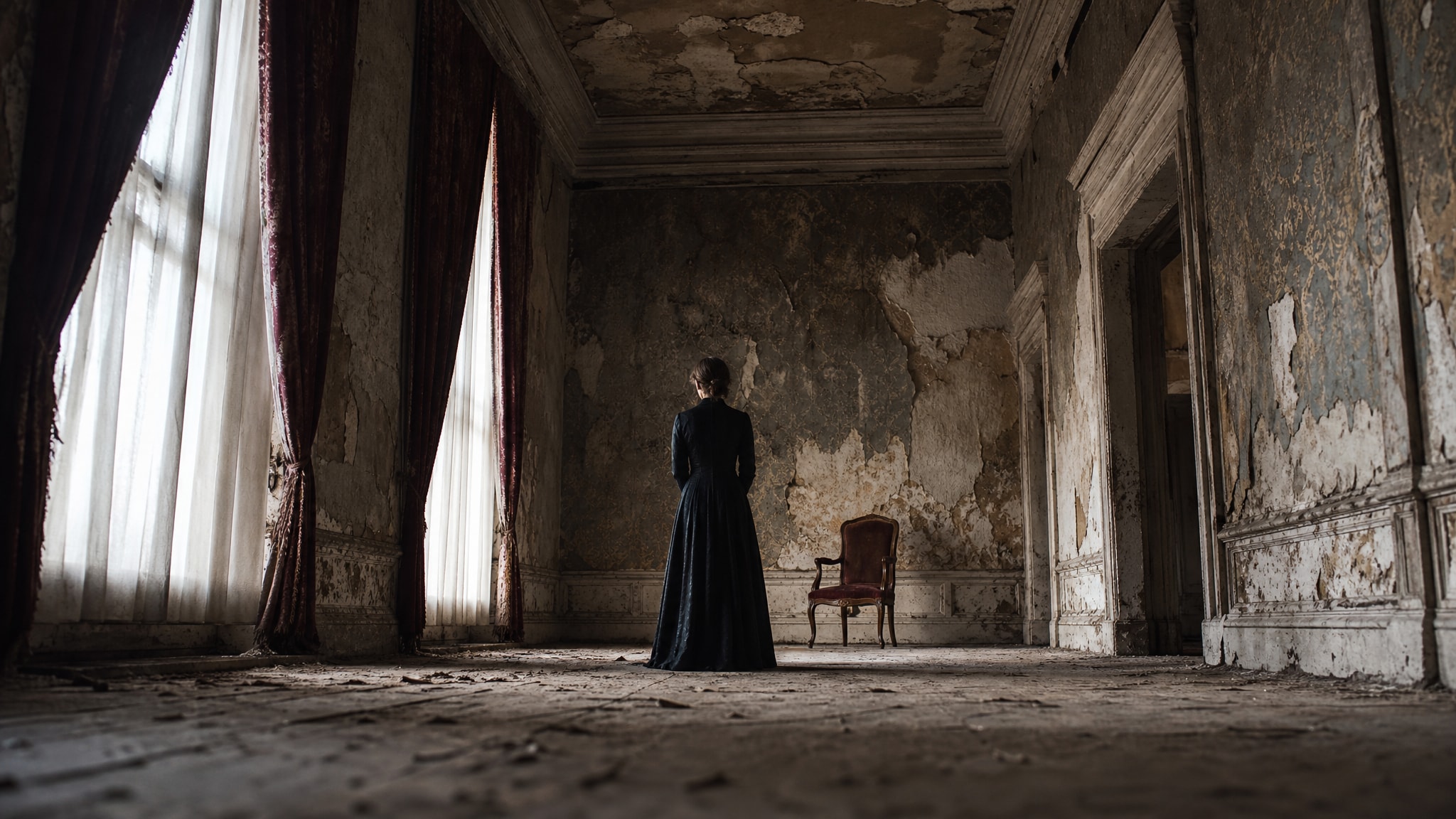
There is a particular silence that settles over the page when you open a true gothic novel, a quietude that feels less like absence and more like a held breath. This is not the adrenaline-fueled terror of the jump scare or the visceral shock of gore, but something far older. Gothic fiction understands that fear emerges not from events alone but from expectation, hesitation, and the strange pressure of empty space. When we ask why gothic horror fiction feels lonely, we are really asking about the architecture of human longing and the spaces where grief refuses to be evicted.
The loneliness in these stories is not merely a plot device, a convenient way to strand a protagonist. It is the atmosphere in which the narrative breathes. You feel this isolation as a physical weight, a melancholy in horror novels that precedes any supernatural manifestation. It is the emotional truth that makes the ghost believable. Without the profound solitude of the living, the dead would have nowhere to haunt.
The Architecture of Solitude in Gothic Spaces
Physical setting in gothic literature never serves as mere backdrop. The crumbling manor or wind-swept moor functions as an externalized psyche, where every drafty corridor mirrors an internal void. When you walk through these fictional estates, you traverse a landscape of emotional desolation, one where the environment itself enforces the character’s separation from the world. If you seek haunted estate novels that embody isolation, you will find that the house is always more than shelter. It is a cage built from memory and stone.
How Decaying Estates Mirror Internal Emptiness
The rotting grandeur of a gothic estate gives a tangible vocabulary to feelings that resist direct words. Peeling wallpaper and overgrown gardens do not simply signal neglect; they map the precise contours of a protagonist’s abandoned hope. Feminist gothic novels turn haunted manors and madness into narratives of power, rebellion, and eerie self-discovery born from enforced solitude, making domestic confinement a crucible for identity. The decay is active, a slow consumption that parallels the erosion of the self under the weight of unprocessed loss.
This mirroring effect makes the setting participate in the narrative rather than merely observe it. A locked room is never just a locked room. It is the sealed chamber of a traumatic memory the narrator cannot yet face. The physical barriers within the house become the psychological barriers within the mind, so that exploring the estate means excavating the soul.
Silence as a Narrative Character
Silence in gothic fiction carries the same weight as any speaking character, demanding attention through its sheer density. It is not the absence of sound but the presence of withheld speech, a tension that vibrates in the negative space between lines of dialogue. Gothic fiction runs on patience, building dread room by room and secret by secret until the house itself feels alive with accumulated loneliness. You hear this silence most clearly when the narrator stops describing the supernatural and starts describing the unbearable quiet of their own company.
This atmospheric dread relies entirely on sensory deprivation rather than sensory overload. The creaking floorboard matters only because of the vast stillness around it, which turns the intrusion into something intimate, almost violating. By refusing to fill every moment with noise or action, the genre forces both character and reader to sit with the discomfort of being utterly alone with one’s thoughts.
Melancholy in Horror Novels as Emotional Truth
Sadness often arrives before the specter does, establishing a baseline of sorrow that makes the horror that follows feel tragically inevitable rather than randomly cruel. This melancholy in horror novels is the emotional bedrock the supernatural stands on, since ghosts are ultimately manifestations of unresolved feeling. Without that foundational grief, the haunting would lack resonance. It would remain a mechanical trick rather than a spiritual inquiry.
Grief Haunting the Living
The true antagonist in character-driven gothic fiction is rarely the monster under the bed. It is the unprocessed mourning that makes the monster visible. Loss creates a permeability in the survivor, a thinning of the veil between what is and what was, that lets the past bleed into the present. This is why fiction exploring the boundary between life and death resonates so deeply. It acknowledges that the dead remain present precisely because the living have not yet learned how to let them go. The ghost is not an invader but a symptom of love that has nowhere left to land.
Grief in this tradition is not a problem to be solved but a state to be inhabited. Characters do not defeat their sadness. They survive it, or they succumb to it, or they learn to carry it as one carries a lantern through fog. This refusal to offer easy catharsis separates gothic melancholy from sentimental tragedy. It honors the persistence of pain as a testament to connection.
The Weight of Unspoken Secrets
Repression generates its own gravity, pulling characters inward until they collapse under the mass of what they cannot say. Family secrets and silenced histories create a pervasive alienation, isolating the protagonist even in the midst of society, for they are forever separated by the knowledge they must conceal. This unvoiced pain drives the plot forward through evasion and half-truths rather than confrontation. The horror lies not in the secret itself, but in the exhausting performance of normalcy required to keep it buried.
You recognize this weight because it mirrors the private burdens we all carry, the things we cannot say even to those closest to us. The gothic novel gives form to this inarticulacy, turning personal shame into shared aesthetic experience. When the secret finally surfaces, it does so with the force of geological pressure released, reshaping the landscape of the story and the psyche of the narrator.
Isolation Themes in Ghost Stories and Psychological Dread
Removing social support systems intensifies psychological horror, because characters lose the emotional anchors that give them stability, and dread becomes inseparable from loneliness. Without others to confirm reality, the protagonist’s perception becomes the only measure of truth, and that measure is inherently suspect. This narrative isolation forces a confrontation with fear that cannot be mediated or softened by communal reassurance. It strips away the defenses that ordinary social interaction provides.
Losing Emotional Anchors
The systematic removal of allies, confidants, and rational voices leaves the protagonist exposed to the full force of their own uncertainty. Each lost connection narrows the world further, until reality contracts to the dimensions of a single, terrified consciousness. This is not merely suspense. It is the vertigo of existing without witness. You feel this contraction viscerally, understanding that the true threat is not the ghost but the possibility that there is no one left to tell you the ghost isn’t real.
Social isolation in gothic fiction becomes a laboratory for examining the fragility of sanity itself. Without the mirror of other minds, the self begins to distort, projecting its fears onto the environment until interior and exterior worlds merge. The haunted house is terrifying not because it contains spirits, but because it contains no one who can confirm that you are still yourself.
Unreliable Narrators and Self-Doubt
Loneliness distorts perception in ways that make the unreliable narrator not a gimmick but a psychological necessity. When you encounter unreliable narrators shaped by solitude, you are witnessing the natural consequence of prolonged isolation: the erosion of the boundary between observation and projection. Their testimony wavers not because they are deceitful, but because they have been alone so long that their inner world has colonized the outer one. The reader inherits this doubt, unable to trust the very eyes through which they see the story.
This narrative instability produces a dread that lingers beyond the final page, because it implicates your own capacity for self-deception. The question shifts from “Is the ghost real?” to “Can I trust my own senses when stripped of social confirmation?” The horror becomes epistemological, rooted in the uncertainty of solitary consciousness rather than in external threat.
Why Gothic Horror Is Emotional Rather Than Visceral
Shock-based horror targets the nervous system, delivering a spike of adrenaline that dissipates almost as quickly as it arrives. Gothic horror targets the heart, embedding itself in the slower rhythms of sorrow and recognition that persist long after the book is closed. This is why gothic horror is emotional in a way that goes beyond mere fright. It asks you to feel with the character rather than simply react to their peril. The terror is secondary to the tenderness, or at least inseparable from it.
Visceral horror consumes attention; emotional horror expands it. Where the former makes you look away, the latter invites you to look deeper, to sit with discomfort until it becomes understanding. That is the difference between being startled and being moved, between a sensation that passes through the body and one that settles in the bones. The lingering quality of gothic dread comes from its refusal to resolve, leaving you with questions that have no clean answers.
Gothic fiction does not offer the catharsis of survival so much as the companionship of shared endurance. It validates the experience of carrying pain that cannot be fixed, only borne. This is why readers return to these dark spaces again and again, seeking not escape but recognition.
Solitude in Dark Fantasy Versus Traditional Horror
Solitude in dark fantasy often carries a different valence than in traditional gothic horror, functioning as choice or magical condition rather than purely punitive imposition. The dark fantasy protagonist may withdraw into wilderness or tower as an act of agency, seeking isolation as a source of power or transformation. In gothic horror, by contrast, solitude is typically suffocating and involuntary, a prison rather than a sanctuary. This distinction shapes the emotional texture of each genre, even as both explore the boundaries of human endurance.
Dark fantasy solitude can be generative, a space where the self is remade through ordeal. Gothic solitude is erosive, wearing down the self until only the raw nerve remains. Yet both traditions agree that certain truths can only be reached in the absence of others, that some knowledge requires the silence of separation. The difference lies in whether that silence is endured or embraced, whether it breaks the spirit or tempers it.
You may find yourself drawn to one mode over the other depending on what kind of loneliness you need to explore. Sometimes we require the dark fantasy’s empowering withdrawal; other times, we need the gothic’s honest depiction of confinement.
Finding Connection Through Shared Loneliness
We read lonely books not to deepen our isolation, but to discover that our isolation is not unique. Modern readers return to gothic stories to understand the parts of themselves they keep locked away, using haunting architecture as metaphor for interior exploration. This paradoxical intimacy is the genre’s greatest gift: the sense of being accompanied in the very experience of being alone. You find in these pages a companion who understands the weight you carry, because they have carried it too.
Reading as Communal Haunting
The act of reading gothic fiction turns private melancholy into shared ritual, creating a community of solitary witnesses across time and space. Each reader who enters the haunted estate brings their own ghosts, adding to the accumulated resonance of the narrative. This is why we return to gothic horror: not for the fright, but for the fellowship of those who have stood in the same dark corridors and found them habitable. The book becomes a meeting place for souls who might never connect in daylight.
This communal haunting offers solace without false comfort. It acknowledges pain without pretending to cure it. It says: you are not broken for feeling this; you are human. In a culture that often pathologizes sadness and demands constant connectivity, the gothic novel preserves a space for dignified solitude.
Atmospheric Storytelling That Lingers
The stories that stay with us are those that match their form to their feeling, where the prose itself breathes with the rhythm of the emotion it describes. In my own work, The Circle of Witham Grange emerged from this conviction, that atmosphere is not decoration but meaning, that the slow accumulation of sensory detail can say what plot cannot. Character-driven ghost tales honor solitude by refusing to rush through it, giving grief the time and space it demands. This is storytelling as vigil, keeping watch beside the things we cannot bear to face directly.
Atmospheric prose invites you to inhabit rather than observe, slowing your breathing to match the cadence of the sentence. It trusts you to find significance in shadow and silence, to understand that what is unsaid often carries more weight than what is spoken. In this shared slowness, writer and reader meet in the space between words, finding connection in the very acknowledgment of separation.
Frequently Asked Questions About Gothic Horror
What defines Gothic fiction?
Gothic fiction is defined by its fusion of horror and romance, typically featuring decaying architecture, psychological distress, and supernatural elements that symbolize repressed emotions or social anxieties. It prioritizes atmosphere and emotional resonance over plot-driven scares, using isolation and melancholy as central thematic concerns. The genre emerged in the late eighteenth century and continues to evolve while maintaining its focus on the intersection of fear and feeling.
What is the female gothic theory?
Female gothic theory examines how women writers used gothic conventions to explore gendered experiences of confinement, powerlessness, and domestic oppression. Scholars like Ellen Moers and Sandra Gilbert argue that haunted castles and madwomen in attics function as metaphors for patriarchal control and female rebellion. This critical framework reveals how gothic fiction provided women with a coded language for articulating experiences that could not be stated directly in realist fiction.
Is Frankenstein Victorian or gothic?
Frankenstein is firmly gothic rather than Victorian, having been published in 1818 during the Romantic period, decades before Queen Victoria’s reign began in 1837. While it shares some thematic concerns with later Victorian literature, its emphasis on sublime landscapes, emotional extremity, and supernatural transgression places it squarely within the gothic tradition established by Walpole and Radcliffe. Its scientific themes anticipate Victorian anxieties, but its aesthetic and emotional register remains distinctly Romantic gothic.
What is the difference between gothic literature and horror literature?
Gothic literature emphasizes psychological dread, atmospheric melancholy, and emotional complexity, using supernatural elements as metaphors for internal states rather than sources of visceral terror. Horror literature more broadly encompasses any fiction designed to frighten, including graphic violence, jump scares, and monstrous threats that target immediate fear responses. While gothic is a subset of horror, it distinguishes itself through its literary ambitions, slow pacing, and focus on sorrow and isolation over shock and revulsion.
Leave a Reply